With the continuous advancement of automotive technology, especially the upgrading of powertrain systems, electrification transformation, and the increasing demand for NVH (Noise, Vibration, Harshness) performance and reliability, metal bellows have become an indispensable key component in modern automotive systems. As a flexible metal component with a convoluted structure, metal bellows are widely used in automotive applications due to their excellent flexibility, high-temperature resistance, pressure resistance, and leak-tightness. This guide systematically elaborates on the typical applications, core performance requirements, and scientific selection methods of metal bellows in the automotive industry, aiming to provide practical reference for automotive R&D personnel, procurement personnel, and maintenance engineers.
1. Overview of Metal Bellows in the Automotive Industry
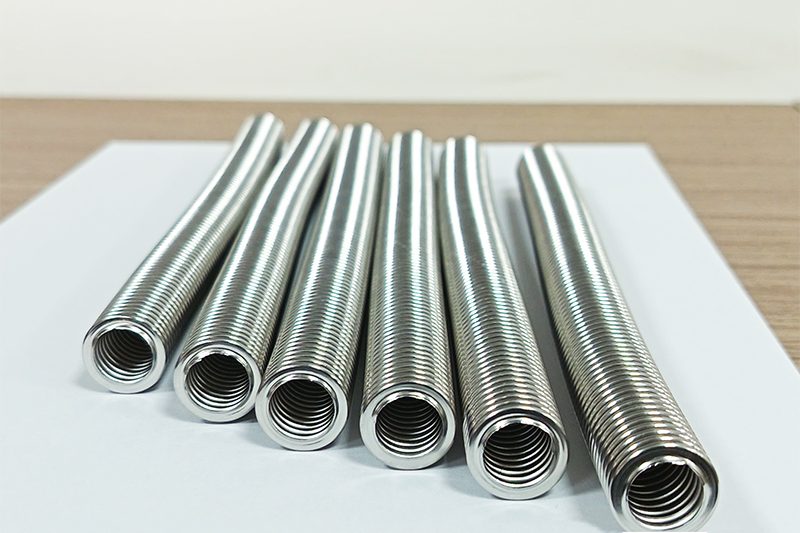
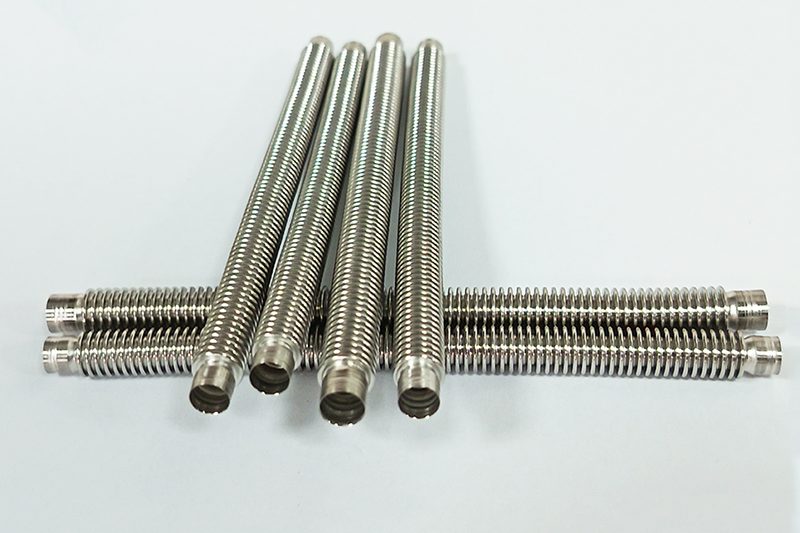
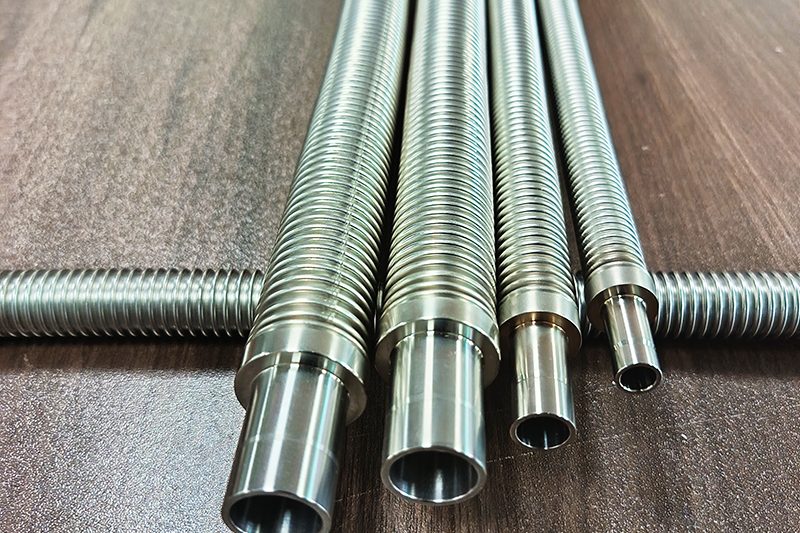
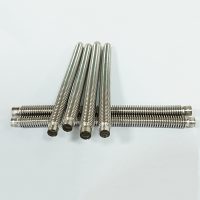
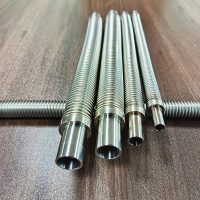
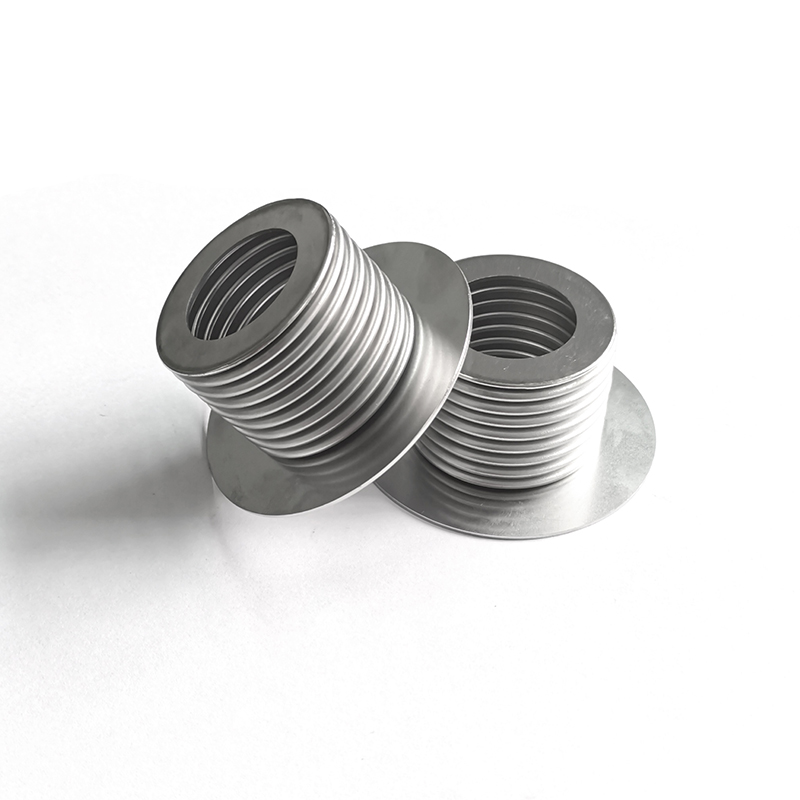
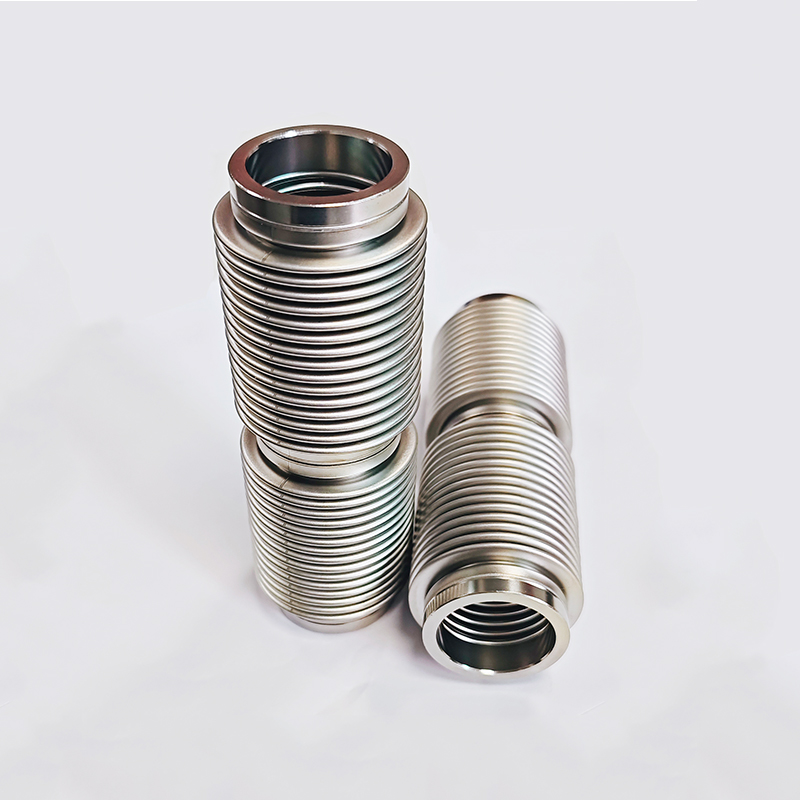
Metal bellows are flexible cylindrical components made of thin-walled metal tubes (usually stainless steel, nickel-based alloys, or copper alloys) through processes such as hydroforming, welding, or electroforming, with a series of annular convolutions along the axial direction. Their unique structural design enables them to achieve axial, lateral, and angular deformation within a certain range, thereby absorbing displacement, damping vibration, compensating for thermal expansion, and ensuring sealed transmission. In the automotive industry, metal bellows are mainly used in harsh working environments such as high temperature, high pressure, vibration, and corrosion, and their performance directly affects the safety, reliability, and comfort of the entire vehicle.
Compared with traditional flexible components (such as rubber hoses), metal bellows have obvious advantages: excellent high-temperature resistance (can withstand -200℃ to 600℃+), strong corrosion resistance, long fatigue life (up to millions of cycles), zero leakage, and good structural stability, making them suitable for key automotive systems that require high reliability and long service life.
2. Typical Applications of Metal Bellows in the Automotive Industry
Metal bellows are widely used in automotive powertrain, exhaust system, cooling system, braking system, and new energy vehicle power battery systems. Different application scenarios have different requirements for their performance and structure. The following are the most common application scenarios:
2.1 Exhaust System
The exhaust system is the most important application scenario of metal bellows in traditional fuel vehicles. The exhaust gas discharged from the engine has high temperature (up to 600-900℃) and high pressure, and the engine vibration will be transmitted to the exhaust pipe, which requires the exhaust system to have good flexibility and vibration damping performance. Metal bellows are mainly used in the exhaust manifold, front exhaust pipe, and exhaust muffler connection parts, playing three core roles:
- Compensating for thermal expansion: Absorb the axial and lateral displacement caused by the thermal expansion and contraction of the exhaust pipe when the engine is working, avoiding the exhaust pipe from being deformed or cracked due to thermal stress.
- Damping vibration: Isolate the vibration generated by the engine, reduce the transmission of vibration to the vehicle body, and improve the NVH performance of the vehicle.
- Compensating for installation deviation: Adjust the installation deviation between the exhaust pipe and the engine, ensuring the tightness of the exhaust system and avoiding exhaust gas leakage.
In the exhaust system, metal bellows are usually made of high-temperature resistant stainless steel (such as 304, 316L) or nickel-based alloys (such as Inconel 625), and are often equipped with a metal mesh sleeve or protective cover to prevent damage from external impact and reduce noise leakage.
2.2 Powertrain System
In the powertrain system (engine, transmission), metal bellows are used in the connection parts of the oil pipe, water pipe, and air pipe, mainly to solve the problems of displacement compensation and vibration isolation between components. For example:
- Engine oil pipe: Absorb the displacement and vibration between the engine and the oil cooler, ensuring the smooth circulation of engine oil and avoiding oil leakage due to pipeline fatigue开裂.
- Transmission oil pipe: Compensate for the axial displacement generated by the transmission during operation, adapt to the relative movement between the transmission and the vehicle body, and improve the service life of the oil pipe.
- Turbocharger connection: In turbocharged engines, metal bellows are used to connect the turbocharger and the exhaust pipe, withstanding high temperature and high pressure, and compensating for the displacement caused by the thermal expansion of the turbocharger, ensuring the stability of the turbocharging system.
In addition, metal bellows are also used in the fuel system of traditional fuel vehicles, such as the connection between the fuel pump and the fuel pipe, which has the characteristics of corrosion resistance (resistant to gasoline, diesel) and leak-tightness, ensuring the safety of fuel transmission. For high-pressure fuel pumps, metal bellows are designed to withstand pressure pulses up to 300 bar and can complete more than 1 billion load cycles, with excellent durability.
2.3 Braking System
In the automotive braking system, especially the hydraulic braking system, metal bellows are used in the brake master cylinder, brake wheel cylinder, and brake hose connection parts. Their main function is to compensate for the displacement of the brake components, ensure the tightness of the hydraulic system, and prevent brake fluid leakage. The metal bellows used in the braking system need to have high pressure resistance (usually 10-20MPa) and good compatibility with brake fluid, and are usually made of corrosion-resistant stainless steel or copper alloys.
For the pressure sensor spark plugs in the braking system, metal bellows act as high-dynamic seals that are resistant to temperature changes and high pressure, capable of withstanding pressure pulses of 0~200 bar and axial displacement of 0~20µm, and can work stably at temperatures above 400℃.
2.4 New Energy Vehicle Systems
With the rapid development of new energy vehicles (pure electric vehicles, hybrid vehicles), metal bellows have new application scenarios, mainly focusing on the power battery system, electric drive system, and cooling system:
- Power battery cooling system: The power battery generates a lot of heat during charging and discharging, and the cooling system needs to circulate coolant stably. Metal bellows are used in the connection parts of the battery cooling pipe, which can compensate for the displacement caused by the thermal expansion of the cooling pipe and the vibration of the vehicle body, ensuring the tightness of the cooling system and avoiding coolant leakage, which affects the safety of the battery.
- Electric drive system: The electric motor and reducer in the electric drive system generate vibration and thermal expansion during operation. Metal bellows are used in the connection parts of the cooling pipe and the oil pipe of the electric drive system, withstanding high temperature and vibration, and ensuring the stable operation of the electric drive system.
- Pneumatic linear actuator: In the active suspension mechanism of new energy vehicles, metal bellows are used to manufacture pressure-resistant pneumatic linear actuators, which can regulate the vehicle posture and provide damping force. After structural optimization (such as adding viscoelastic support rings), the pressure resistance of metal bellows can be increased from 0.1MPa to 0.7MPa, with no sliding components and minimal thrust loss.
3. Core Performance Requirements of Metal Bellows for Automotive Applications
Automotive metal bellows work in complex and harsh environments (high temperature, high pressure, vibration, corrosion, etc.), so their performance must meet strict automotive industry standards. The core performance requirements are as follows:
3.1 High-Temperature Resistance
Different application scenarios have different requirements for high-temperature resistance. For example, the metal bellows used in the exhaust system need to withstand high temperatures of 600-900℃, while those used in the cooling system and braking system need to withstand high temperatures of 100-200℃. The material selection and structural design of the bellows directly determine its high-temperature resistance. High-temperature resistant materials (such as Inconel 625, 316L stainless steel) and reasonable convolution design can effectively improve the high-temperature stability of the bellows and avoid thermal fatigue and deformation under long-term high-temperature operation.
3.2 Pressure Resistance and Leak-Tightness
Metal bellows in automotive systems (such as braking systems, fuel systems, and turbocharging systems) need to withstand a certain pressure, and the leak-tightness is crucial to ensure the safety of the vehicle. The pressure resistance of the bellows is related to its material thickness, convolution structure, and welding quality. The leak-tightness is mainly guaranteed by the welding process (such as laser welding, TIG welding) and the structural design of the bellows. High-quality welded bellows can achieve zero leakage, with a leak rate of up to 1×10^-10 std cc/sec He, ensuring long-term stable operation of the system.
3.3 Flexibility and Displacement Compensation Capacity
The core function of metal bellows is to absorb displacement and damp vibration, so flexibility and displacement compensation capacity are important performance indicators. The flexibility of the bellows is determined by the number of convolutions, the shape of the convolutions, and the material properties. More convolutions mean better flexibility and larger displacement compensation capacity, but they will reduce the pressure resistance. Therefore, it is necessary to balance flexibility and pressure resistance according to the application scenario. For example, 28-convolution bellows have excellent flexibility and large displacement compensation capacity, suitable for exhaust systems that require thermal expansion and vibration absorption; while 2-3 convolution bellows have high pressure resistance and rigidity, suitable for high-pressure systems such as braking systems.
3.4 Fatigue Life
Automotive components need to withstand long-term cyclic vibration and thermal expansion, so metal bellows must have a long fatigue life. The fatigue life of the bellows is related to the material fatigue strength, convolution structure, and working stress. Under normal working conditions, the fatigue life of automotive metal bellows should be no less than 100,000 cycles, and some key components (such as turbocharger connection bellows) require a fatigue life of more than 1 million cycles. Optimized stress distribution and high-quality material selection can significantly improve the fatigue life of the bellows. For example, the metal bellows used in piezoelectric injectors can complete more than 1 billion load cycles, with extremely high durability.
3.5 Corrosion Resistance
Metal bellows in automotive systems may come into contact with corrosive media (such as brake fluid, fuel, coolant, and exhaust gas), so they need to have good corrosion resistance. The corrosion resistance is mainly determined by the material of the bellows. Stainless steel (304, 316L) has good general corrosion resistance, nickel-based alloys have excellent high-temperature corrosion resistance and chemical corrosion resistance, and copper alloys have good corrosion resistance to brake fluid and coolant. In addition, surface treatment (such as galvanizing, passivation) can also improve the corrosion resistance of the bellows.
4. Selection Guide for Metal Bellows in the Automotive Industry
The selection of metal bellows in the automotive industry needs to be based on the application scenario, working conditions, and performance requirements, following the principles of “matching performance, ensuring reliability, and optimizing cost”. The specific selection steps are as follows:
4.1 Clarify the Application Scenario and Working Conditions
First, it is necessary to clarify the specific application scenario of the metal bellows (such as exhaust system, braking system, power battery system), and determine the key working conditions, including: working temperature, working pressure, displacement type (axial, lateral, angular), displacement amount, vibration frequency, contact medium (fuel, brake fluid, coolant, exhaust gas), and service life requirements. These parameters are the basis for selecting the material, structure, and specification of the bellows.
For example, for the exhaust system of a turbocharged engine, the working temperature is 700-900℃, the working pressure is 0.3-0.5MPa, and the axial displacement is 5-10mm. It is necessary to select a metal bellows made of high-temperature resistant nickel-based alloy or 316L stainless steel, with a reasonable number of convolutions to ensure flexibility and displacement compensation capacity; for the braking system, the working pressure is 10-20MPa, the working temperature is 80-150℃, and the displacement is small. It is necessary to select a metal bellows with high pressure resistance and good leak-tightness, made of corrosion-resistant stainless steel or copper alloy.
4.2 Select the Appropriate Material
The material of the metal bellows directly determines its high-temperature resistance, corrosion resistance, and fatigue life. The common materials for automotive metal bellows and their application scenarios are as follows:
- 304 Stainless Steel: It has good corrosion resistance and general high-temperature resistance (up to 600℃), suitable for cooling systems, braking systems, and fuel systems of ordinary fuel vehicles, with low cost and high cost performance.
- 316L Stainless Steel: It has better corrosion resistance and high-temperature resistance (up to 800℃) than 304 stainless steel, suitable for exhaust systems of ordinary fuel vehicles and cooling systems of new energy vehicles, and is the most widely used material in automotive metal bellows.
- Nickel-based Alloys (Inconel 625, Hastelloy): It has excellent high-temperature resistance (up to 1000℃) and corrosion resistance, suitable for exhaust systems of high-performance vehicles (such as sports cars, heavy-duty trucks) and turbocharger connection parts, with high cost but excellent performance.
- Copper Alloys: It has good thermal conductivity and corrosion resistance to brake fluid, suitable for bellows in braking systems, with good flexibility but poor high-temperature resistance.
When selecting materials, it is necessary to balance performance and cost. For key components with harsh working conditions (such as exhaust systems of high-performance vehicles), high-performance materials (such as nickel-based alloys) should be selected; for general components (such as cooling systems), cost-effective materials (such as 304 stainless steel) can be selected.
4.3 Determine the Structural Type and Specifications
The structural type and specifications of metal bellows are determined according to the displacement requirements, installation space, and working pressure. Common structural types of automotive metal bellows include hydroformed bellows and welded bellows:
- Hydroformed Bellows: Made by expanding a welded tube using high-pressure fluid, suitable for larger, more durable components, with the advantages of simple structure, low cost, and good flexibility, suitable for most automotive application scenarios (such as exhaust systems, cooling systems).
- Welded Bellows: Made by laser or TIG welding thin metal diaphragms, used in high-precision, small-scale applications, with the advantages of high pressure resistance, good leak-tightness, and long fatigue life, suitable for key components (such as braking systems, turbocharger connections).
The specifications of the bellows mainly include inner diameter (DN), outer diameter (D), length (L), number of convolutions, and wall thickness. The inner diameter and outer diameter need to match the connected pipeline or component; the length needs to consider the installation space and displacement compensation amount; the number of convolutions needs to balance flexibility and pressure resistance; the wall thickness needs to be determined according to the working pressure and service life. For example, the 3-Convolution Flexible Bellow DN59.1-D81.4-L35 has precise dimensions, moderate rigidity and flexibility, and a compact structure, suitable for narrow installation spaces and small displacement compensation scenarios.
4.4 Verify the Performance Parameters
After selecting the material, structural type, and specifications, it is necessary to verify whether the performance parameters of the bellows meet the working requirements, including high-temperature resistance, pressure resistance, displacement compensation capacity, fatigue life, and leak-tightness. It is recommended to select bellows that meet the automotive industry standards (such as ISO, SAE, GB) and pass the professional performance testing (such as high-temperature aging test, pressure test, fatigue test, leak test). For example, the bellows used in the exhaust system need to pass the high-temperature fatigue test (100,000 cycles at 800℃) and the leak test (zero leakage under 0.5MPa pressure); the bellows used in the braking system need to pass the pressure test (no deformation under 20MPa pressure) and the compatibility test with brake fluid.
4.5 Consider Installation and Maintenance
When selecting metal bellows, it is also necessary to consider the installation convenience and maintenance cost. The bellows should have a simple installation structure, be easy to assemble and disassemble, and be compatible with the existing pipeline or component connection method (such as flange connection, welding connection, clamping connection). In addition, the service life of the bellows should be matched with the service life of the vehicle, reducing the frequency of maintenance and replacement, and lowering the overall cost. For example, integrated welded bellows assemblies can be directly installed without additional assembly, saving installation time and cost; bellows with a protective cover can reduce damage from external impact and extend the service life, reducing maintenance costs.
5. Key Notes for Selection and Application
- Avoid over-sizing or under-sizing: The specifications of the bellows should be matched with the working conditions. Over-sizing will increase the cost and installation space, and under-sizing will lead to insufficient displacement compensation capacity and short service life.
- Pay attention to the compatibility with the contact medium: The material of the bellows should be compatible with the contact medium (such as fuel, brake fluid, coolant) to avoid corrosion and leakage caused by incompatibility.
- Consider the influence of vibration and noise: In the exhaust system and powertrain system, the bellows should have good vibration damping performance, and can be equipped with a metal mesh sleeve or sound insulation layer to reduce noise transmission.
- Select qualified suppliers: Choose suppliers with rich experience in automotive metal bellows production, complete testing equipment, and stable product quality, and require suppliers to provide performance test reports and quality certificates.
- Pay attention to the working environment: For bellows used in harsh environments (such as high temperature, high corrosion), regular inspection and maintenance should be carried out to find and replace damaged bellows in time to avoid safety accidents.
6. Conclusion
Metal bellows, as a key flexible component in the automotive industry, play an important role in ensuring the safety, reliability, and comfort of the vehicle. With the continuous upgrading of automotive technology, especially the rapid development of new energy vehicles, the application scenarios of metal bellows will be more extensive, and the performance requirements will be higher. When selecting metal bellows, it is necessary to comprehensively consider the application scenario, working conditions, performance requirements, and cost factors, follow the scientific selection process, select the appropriate material, structural type, and specifications, and verify the performance parameters to ensure that the bellows can work stably and reliably for a long time.
This guide provides a systematic reference for the application and selection of metal bellows in the automotive industry. In practical applications, it is necessary to combine the specific needs of the vehicle model and the working conditions to make personalized selection and optimization, so as to give full play to the role of metal bellows and promote the continuous improvement of automotive performance.