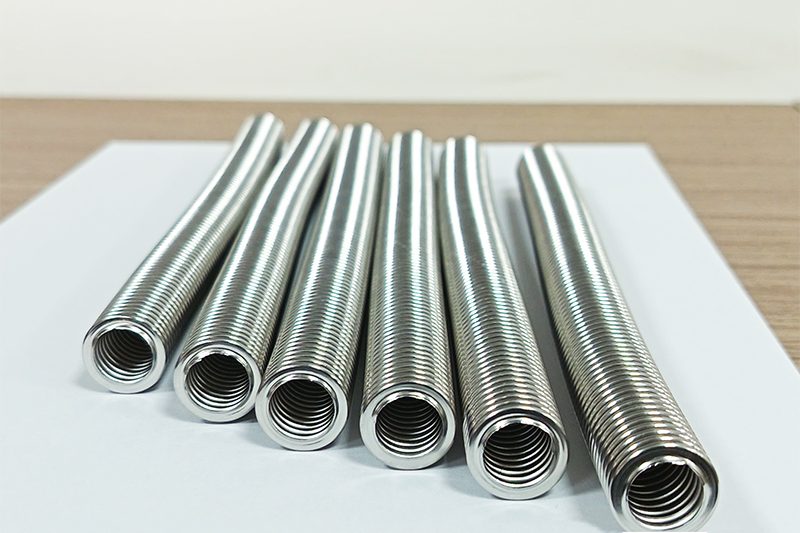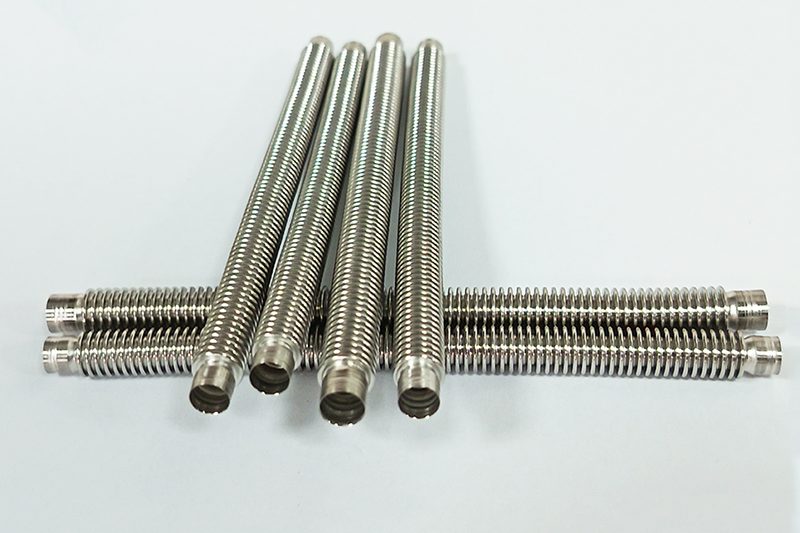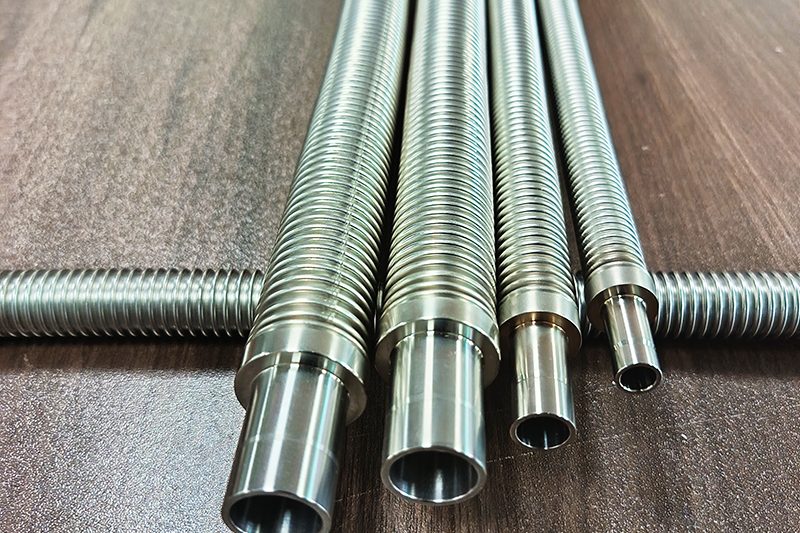
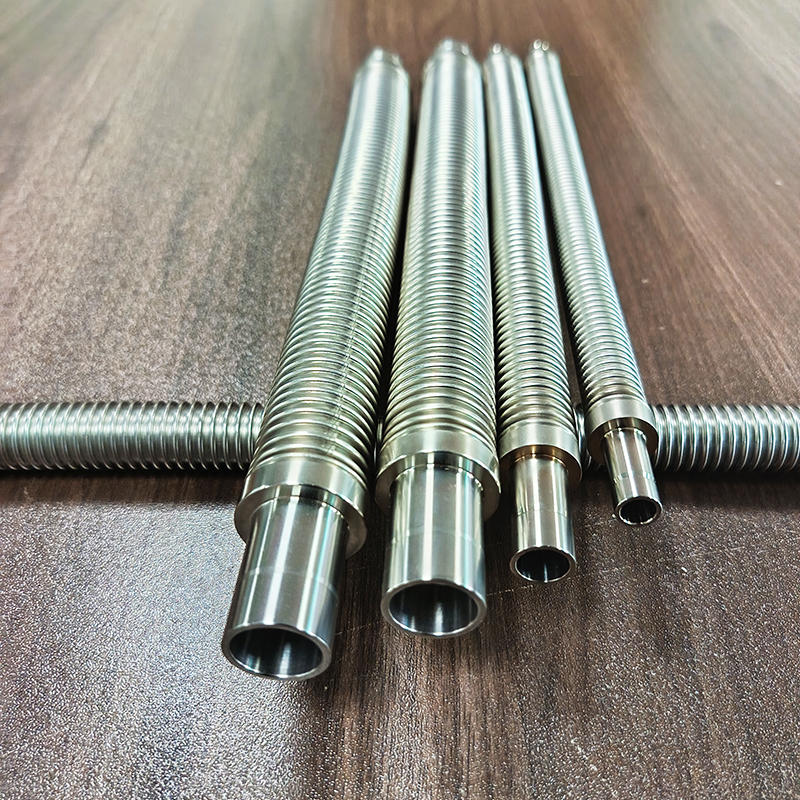
For metal bellows operating in high-corrosion environments, material selection depends on the specific corrosive medium, temperature, and required fatigue life. Below is a ranked comparison of the most widely used corrosion-resistant bellows alloys.
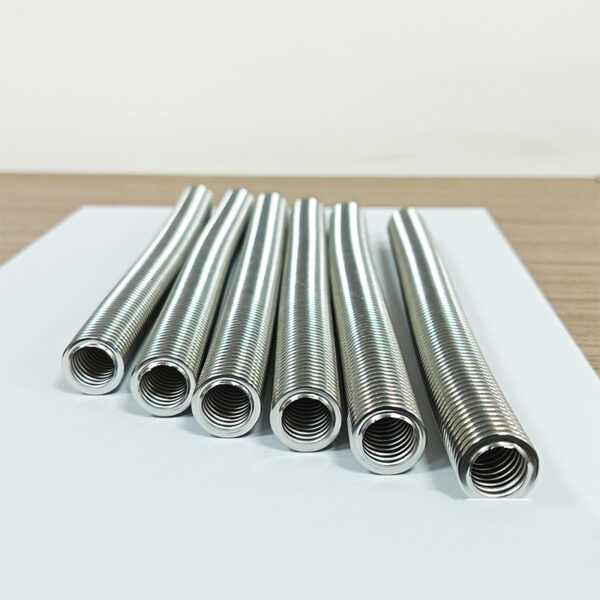
Top Tier — Severe Corrosion Service 1. Hastelloy C-276 (UNS N10276) Best overall for severe chemical corrosion.
Ni-Mo-Cr alloy with ~16% Mo, ~16% Cr, ~5% Fe, ~4% W Excellent resistance to pitting, crevice corrosion, and stress corrosion cracking (SCC) Withstands oxidizing and reducing acids, chlorides, sulfides, and most organic acids Effective in HCl, H₂SO₄ (dilute to moderate), phosphoric acid, and acetic acid PREN (Pitting Resistance Equivalent Number): ~45–47 Limitation: high cost; lower maximum continuous temperature (~1000°C / 1830°F) 2. Hastelloy C-22 (UNS N06022) Improved version of C-276 for mixed-acid and oxidizing environments.
Higher Cr (~22%), lower Mo (~13%), plus W (~3%) and Fe (~3%) Superior resistance to oxidizing acids (HNO₃, mixed HNO₃/HCl) and localized corrosion Better weldability and thermal stability than C-276 PREN: ~52–54 Preferred when the medium contains both oxidizing and reducing species 3. Inconel 625 (UNS N06625) Best balance of corrosion resistance + high-temperature strength + fatigue life.
Ni-Cr-Mo alloy with ~21.5% Cr, ~9% Mo, ~3.5% Nb+Ta Excellent resistance to chloride pitting/crevice corrosion and SCC High creep and fatigue strength at elevated temperatures (up to ~980°C / 1800°F) Widely used in marine, chemical processing, and aerospace bellows PREN: ~43–46 More readily available and often more cost-effective than Hastelloy grades
Second Tier — Moderate-to-High Corrosion
- Duplex / Super Duplex Stainless Steel (UNS S32205 / S32750)
Best for chloride-rich and pitting-prone environments.
2205 (PREN ~35): good for moderate chloride, seawater
2507 / SAF 2507 (PREN ~42–44): super duplex for severe chloride, H₂S, and sour service
High strength (2x austenitic SS), good fatigue resistance
Limitation: narrower forming window; less ductile than austenitic alloys for thin-wall bellows - Titanium Grade 2 / Grade 12 (UNS R50400 / R53400)
Best for seawater, chloride solutions, and oxidizing acids.
Exceptional resistance to seawater, brines, and chloride-induced SCC
Gr.12 (Ti-0.3Mo-0.8Ni) adds crevice corrosion resistance at higher temperatures
Excellent in nitric acid, wet chlorine, and hypochlorite
Limitation: poor in reducing acids (HCl, H₂SO₄); hydrogen embrittlement risk; high modulus makes forming challenging - Incoloy 825 (UNS N08825)
Best for sulfuric acid and reducing-acid environments.
Ni-Fe-Cr-Mo-Cu alloy (~40% Ni, ~22% Fe, ~21% Cr, ~3% Mo, ~2% Cu)
Excellent resistance to H₂SO₄ (up to ~60% concentration), phosphoric acid, and HCl (dilute)
Copper addition improves sulfuric acid resistance
Good SCC resistance in chloride environments
More economical than Hastelloy for acid service
| Material | Best For | Key Limitation |
|---|---|---|
| Monel 400 (N04400) | Seawater, hydrofluoric acid (HF), alkaline solutions | Rapid attack in oxidizing acids; susceptible to SCC in mercury |
| Nickel 200/201 (N02200/N02201) | Hot concentrated caustic (NaOH), food/pharma | Poor in oxidizing acids; low strength at high temp |
| Tantalum | Extreme acid service (boiling HCl, H₂SO₄, aqua regia) | Very expensive; limited to thin liners; poor in HF and strong alkalis |
| 316L Stainless Steel (S31603) | Moderate corrosion baseline (mild acids, atmospheric) | Susceptible to pitting/crevice in chlorides; SCC above ~60°C in chloride |
Selection Decision Matrix
| Corrosion Scenario | Recommended Material |
|---|---|
| Mixed acids / oxidizing + reducing | Hastelloy C-22 |
| Severe reducing acids (HCl, dilute H₂SO₄) | Hastelloy C-276 |
| Chloride / seawater / pitting risk | Titanium Gr.12 or Super Duplex 2507 |
| Sulfuric acid (broad concentration range) | Incoloy 825 |
| High temp + corrosion combined | Inconel 625 |
| HF acid / seawater (non-oxidizing) | Monel 400 |
| Hot concentrated caustic | Nickel 201 |
| Extreme acid (near-universal) | Tantalum (liner) |
Practical Recommendation
For most high-corrosion bellows applications where the exact medium may vary or contain mixed species, Hastelloy C-276 is the safest general-purpose choice. If the environment also involves elevated temperatures and cyclic mechanical loading (typical for expansion joint bellows), Inconel 625 offers the best combination of corrosion resistance, fatigue life, and availability at a lower cost than Hastelloy.
For chloride-heavy or marine service, Titanium Gr.12 or Super Duplex 2507 outperform nickel alloys in pitting/crevice resistance, but require careful forming and hydrogen-embrittlement control during manufacturing.