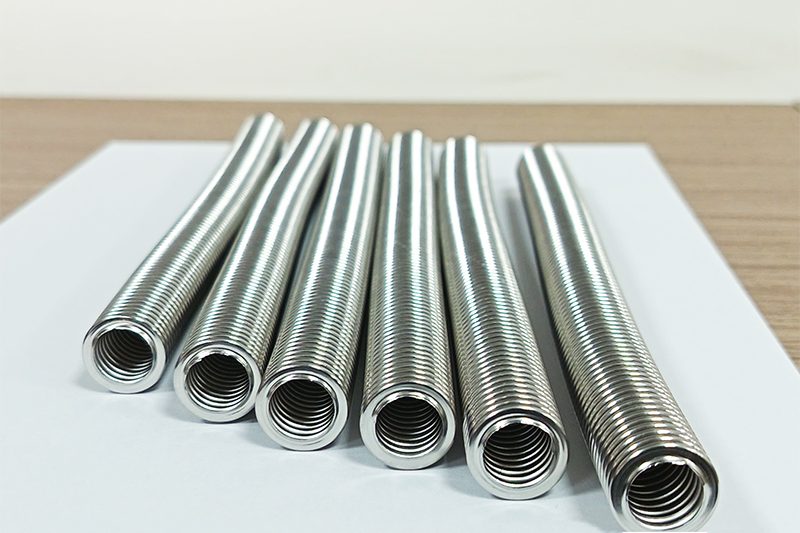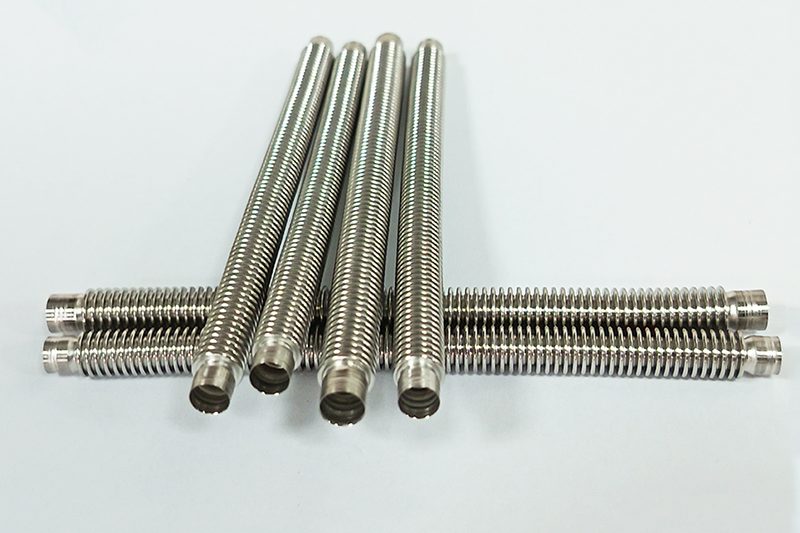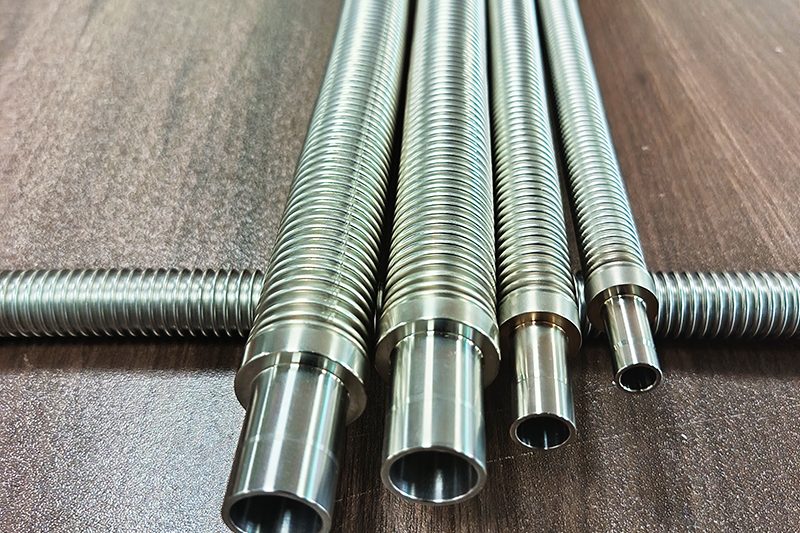
As AI servers, high-performance computing (HPC) clusters, and hyperscale data centers push server power densities to unprecedented levels, traditional air cooling systems can no longer sustain stable thermal management. Liquid cooling has become the mainstream solution for high-power server loops, delivering efficient heat dissipation for high-load GPUs, CPUs, and accelerator modules. However, high-power liquid cooling loops face unique reliability threats: thermal expansion stress, persistent mechanical vibration, installation misalignment, and long-term seal fatigue. Liquid cooling bellows emerge as a critical yet underrated component that solves these pain points, drastically boosting the operational stability, service life, and uptime of server liquid cooling systems. This article explores how liquid cooling bellows enhance reliability in high-power server loops and why they are indispensable for modern data center thermal infrastructure.
- Offset Thermal Expansion and Contraction Stress to Prevent Pipe Failure
High-power servers generate massive heat during continuous operation, causing coolant temperature fluctuations and periodic thermal expansion and contraction of rigid cooling pipes. In closed liquid cooling loops, uncompensated thermal stress leads to micro-cracks, weld loosening, pipe deformation, and even catastrophic coolant leakage over time. Rigid pipe systems have zero tolerance for dimensional changes under heat cycling, making them prone to fatigue failure in long-term 24/7 data center operation.
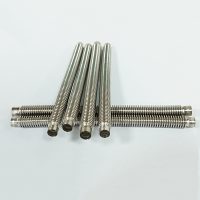
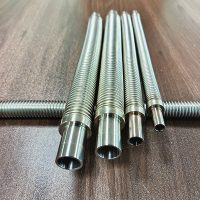
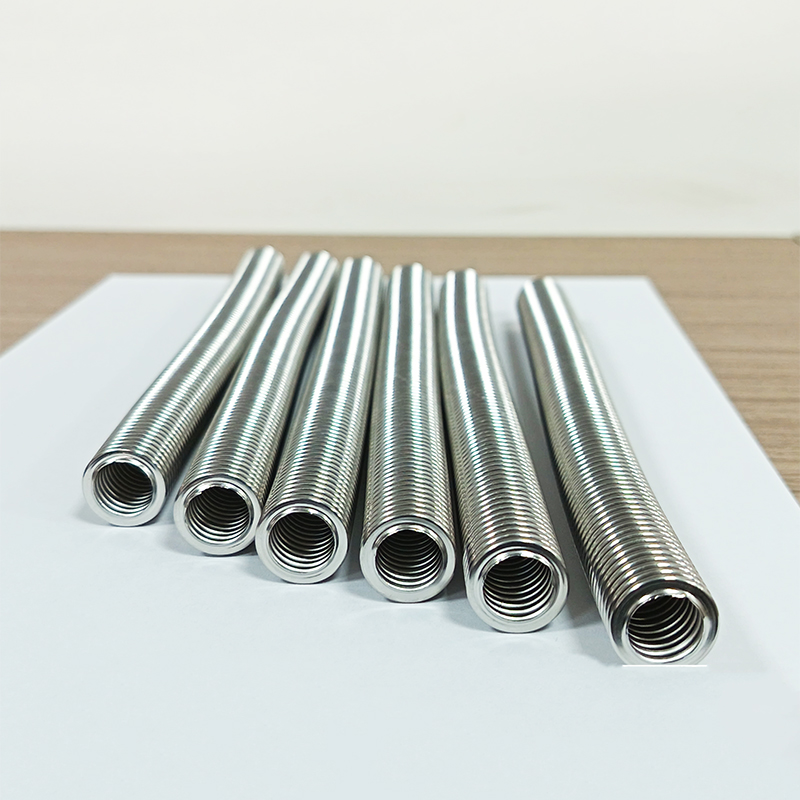
Liquid cooling bellows are engineered with flexible corrugated structures that actively absorb thermal expansion and contraction displacement in server cooling loops. Precision metal bellows can compensate for axial displacement up to ±5mm and angular deviation up to 4°, effectively releasing accumulated thermal stress in the pipeline system. By eliminating rigid stress concentration at pipe joints, welds, and server cold plate interfaces, bellows prevent pipe cracking and joint loosening caused by repeated heat cycles. This thermal compensation capability stabilizes overall loop pressure, avoiding sudden pressure spikes that damage server cooling components and cause unexpected downtime. - Isolate Mechanical Vibration to Reduce System Fatigue Damage
Server liquid cooling loops rely on circulating pumps to drive coolant flow, producing continuous mechanical vibration during operation. Additionally, high-power server hardware operation, rack vibration, and floor micro-shocks in dense data center environments transmit vibration throughout rigid pipe networks. Long-term vibration transmission causes thread loosening, seal wear, and metal fatigue in pipeline components, which are leading causes of slow leakage and premature system failure in high-power cooling loops.
Liquid cooling bellows act as professional vibration isolators for server cooling systems. Installed between pump units and rigid pipelines or at server cabinet cooling interfaces, high-quality bellows reduce vibration transmission by up to 90%. The flexible corrugated structure buffers high-frequency vibration and mechanical shock, isolating vibration propagation across the entire cooling loop. By minimizing vibration-induced friction and stress on pipe joints, seals, and cold plate connections, bellows greatly slow down component fatigue, extending the service life of the entire liquid cooling system and reducing hidden failure risks. - Correct Installation Misalignment and Eliminate Assembly Stress
Hyperscale data center server deployments involve massive rack-based liquid cooling loop assembly. Manual installation errors, rack positioning deviations, and cumulative assembly tolerances often lead to minor misalignment between pipeline interfaces and server cold plate ports. In rigid pipe systems, such misalignment forces pipes and joints to bear forced assembly stress, which gradually amplifies during temperature cycling and vibration, triggering seal failure and coolant leakage.
Liquid cooling bellows feature multi-directional flexibility that adapts to installation deviations in high-power server loops. They effectively compensate for axial, lateral, and angular misalignment during assembly, eliminating forced stress at pipeline connections without compromising structural stability. This adaptive flexibility standardizes liquid cooling loop installation, reduces assembly failure rates, and avoids long-term reliability hazards caused by installation defects. For large-scale data center batch deployment, bellows significantly improve installation yield and post-operation system stability. - Deliver Zero-Leak Sealing Performance for Long-Term Loop Stability
Coolant leakage is the most fatal risk for high-power server liquid cooling loops. Even tiny micro-leaks can cause coolant loss, loop pressure drop, reduced heat dissipation efficiency, and in severe cases, server short circuits and hardware burnout. Traditional rigid pipe gaskets and ordinary connectors are prone to aging and deformation under long-term high temperature, vibration, and coolant erosion, leading to seal failure.
Professional liquid cooling bellows adopt integral hydroforming process and all-metal welded sealing structure, matched with high-precision O-rings or metal sealing components. Certified by ISO 10816 vibration standards and ASTM G31 corrosion tests, these bellows feature excellent resistance to coolant corrosion (water, ethylene glycol, and weak acid-base cooling media) and high-temperature aging. Actual data center operation tests show that high-quality liquid cooling bellows maintain a leakage rate below 0.1% over a 10-year service cycle, achieving long-term zero-leak operation. The stable sealing performance ensures consistent pressure and flow rate in high-power server loops, maintaining continuous and efficient heat dissipation for high-load server hardware. - Improve System Adaptability for High-Density Server Upgrades
With the iterative upgrade of AI and HPC servers, single-server power and heat generation continue to rise, requiring liquid cooling loops to adapt to higher flow rates and more frequent temperature fluctuations. Rigid pipeline systems have poor adaptability and often need overall transformation during server hardware upgrades, bringing high maintenance costs and downtime risks.
Liquid cooling bellows enhance the overall flexibility and scalability of cooling loops. Their flexible structure tolerates wider pressure and temperature fluctuation ranges, adapting to the heat dissipation demands of upgraded high-power servers without large-scale pipeline reconstruction. Meanwhile, bellows reduce pipeline system rigidity, lowering the risk of component damage caused by load changes during server peak operation. This adaptability enables data center liquid cooling systems to support long-term hardware iteration, improving the return on investment of cooling infrastructure. - Reduce Maintenance Costs and Maximize Data Center Uptime
Unplanned downtime caused by liquid cooling loop failures brings huge economic losses to hyperscale data centers. Traditional rigid cooling systems require frequent inspections of joints, seals, and welds to prevent leakage and fatigue failure, consuming massive labor and maintenance resources.
By solving core reliability pain points including thermal stress, vibration damage, installation deviation, and seal aging, liquid cooling bellows significantly reduce the failure frequency of high-power server cooling loops. They extend the maintenance cycle of liquid cooling systems, reduce manual inspection and component replacement costs, and effectively avoid unplanned server downtime caused by cooling system failures. For 24/7 uninterrupted operating data centers, the reliability improvement brought by bellows directly translates to higher operational efficiency and lower total cost of ownership (TCO).
Conclusion
In high-power server liquid cooling loops, reliability is the core foundation of stable thermal management and long-term server operation. Liquid cooling bellows are not just auxiliary pipeline components but key reliability guarantees for modern high-density liquid cooling systems. They address the inherent defects of rigid pipe systems through thermal stress compensation, vibration isolation, installation error correction, zero-leak sealing, and upgrade adaptability, effectively reducing failure risks and maintenance costs of server cooling loops.
As server power density continues to increase and liquid cooling technology becomes fully popularized in data centers, high-performance liquid cooling bellows will become a standard configuration for high-power server cooling loops, helping hyperscale data centers achieve more stable, efficient, and low-cost thermal management operation.