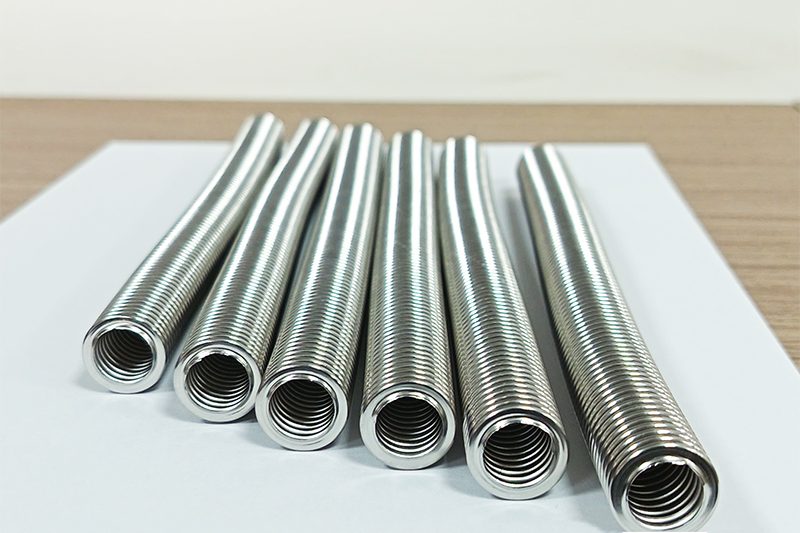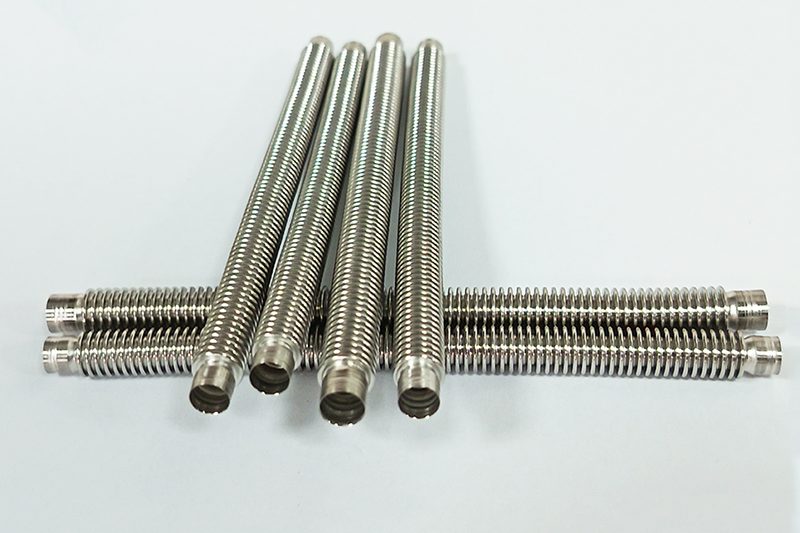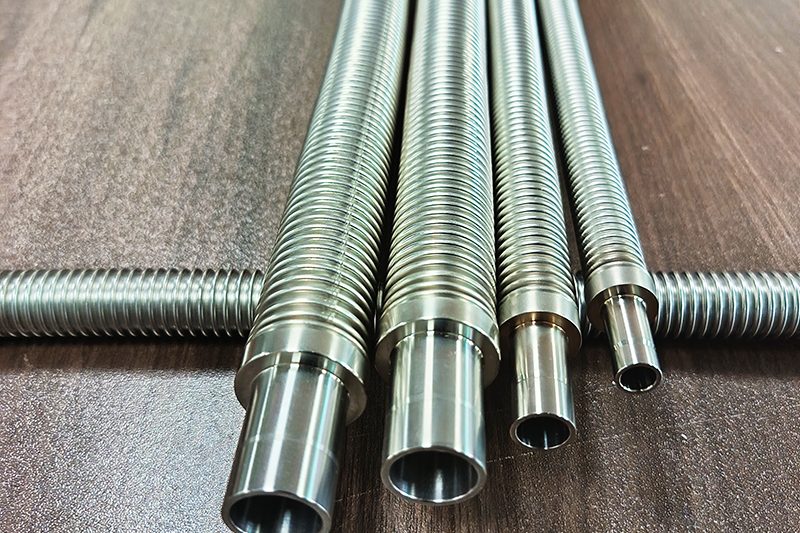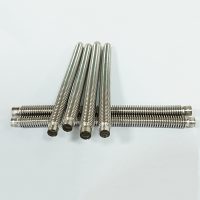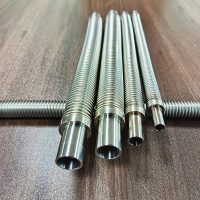
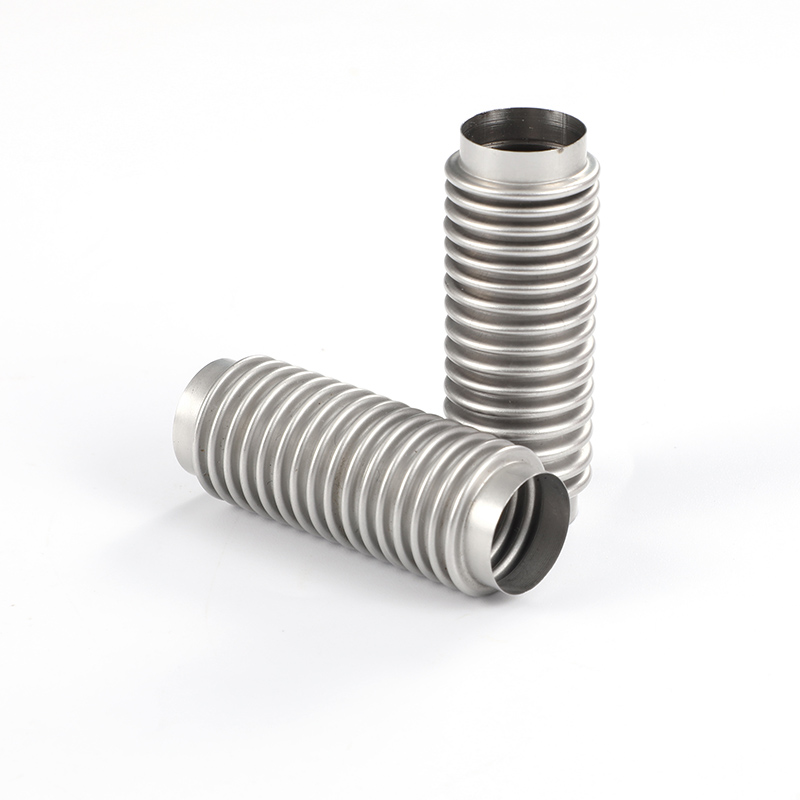
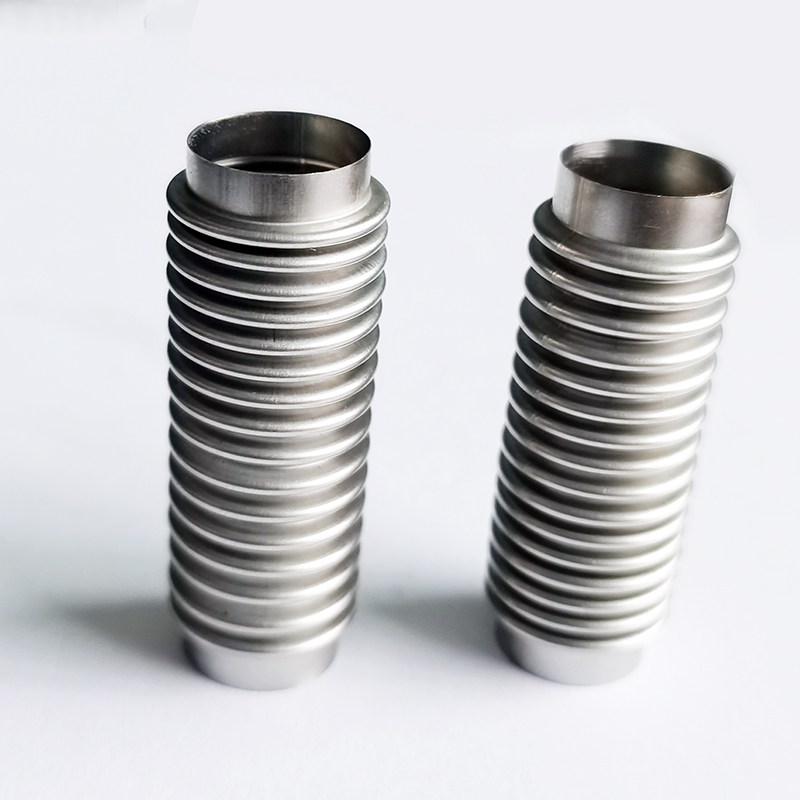
A flexible bellow (often referred to as a flex bellow or bellows coupling) is a flexible element used in mechanical systems to absorb movement (misalignment, thermal expansion, vibration) and reduce stress on components.
Key Functions of a Flex Bellow:
Compensating for Misalignment:
Angular misalignment: When two shafts or components are not perfectly aligned, the bellow can flex to absorb the misalignment.
Axial misalignment: If the shafts move axially (in or out), the bellow allows for this movement without damaging the system.
Radial misalignment: It can also accommodate radial (sideways) misalignment.
Vibration Absorption:
The flex bellow absorbs vibrations and reduces the transmission of those vibrations through the system. This is especially important in systems where smooth, precise motion is needed.
Thermal Expansion:
As equipment heats up, parts can expand or contract. The flex bellow allows for thermal expansion and contraction of components without creating stress or damaging the system.
Sealing:
Bellows are often used as seals to protect sensitive parts from contaminants (dust, dirt, water) while allowing movement. In certain systems, they act as fluid seals to prevent leakage in hydraulic or pneumatic systems.
Compensating for Axial Shifting:
Some systems, like pumps and turbines, may experience axial shifting due to pressure or load changes. Bellows can accommodate these shifts without causing stress on the components.
Common Applications:
Pipes and Fluid Systems:
In piping systems, flex bellows are used to absorb vibrations, accommodate thermal expansion, and prevent leakage.
Power Transmission Systems:
In couplings and shaft systems, flexible bellows accommodate misalignment and absorb shocks.
Automotive and Aerospace:
Used in exhaust systems to reduce stress from engine vibrations and thermal changes, as well as in fuel lines and brake systems.
Manufacturing Equipment:
In industrial machines, bellows protect moving parts like sliding arms or rails and help absorb shocks.
Robotics and Automation:
Bellows are often used to protect moving parts, such as linear actuators, and absorb mechanical stresses.
Materials:
Flexible bellows are made from various materials depending on the application:
Metal (stainless steel, alloy steels) for high-temperature or pressure resistance
Rubber for flexible seals in lower-pressure systems
Composites for lightweight, high-strength applications
Types of Flexible Bellows:
Cylindrical Bellows:
Common for axial movements, they expand and compress along their length.
Convoluted Bellows:
Often used for high-stress applications because their folded design increases flexibility and movement range.
Axial Bellows:
Specifically designed to handle axial displacement (in or out).
Advantages:
No need for lubrication (especially metal bellows)
Durability in harsh conditions (heat, pressure, etc.)
Can handle large deflections and misalignment.