Double-ended flat vacuum bellows
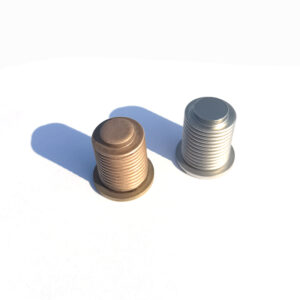
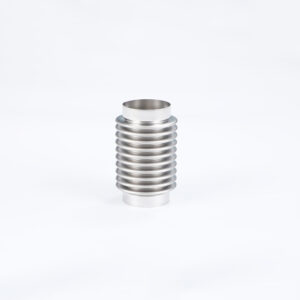
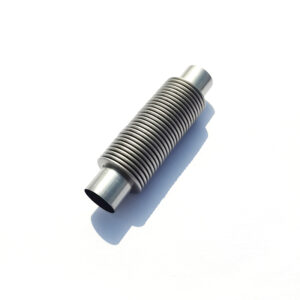
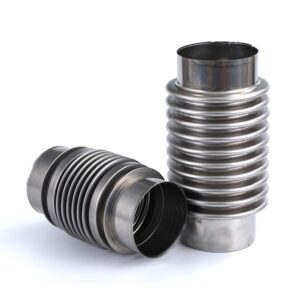
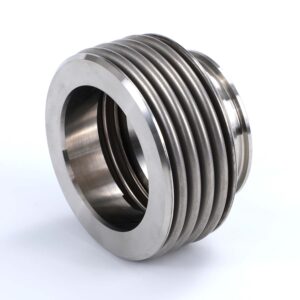
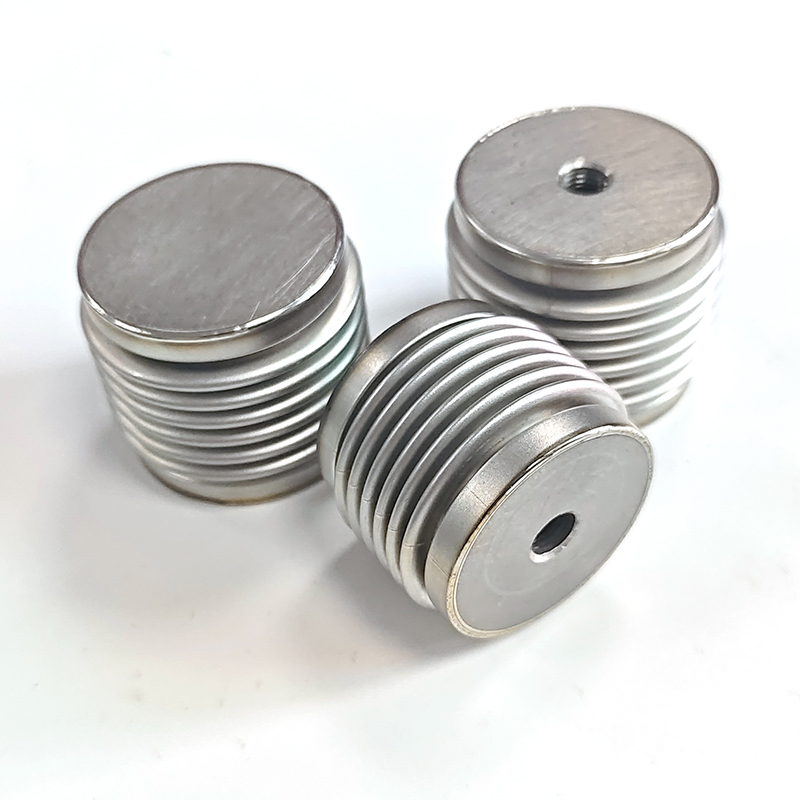
The double-ended flat vacuum bellows is a specialized flexible tubular component designed for vacuum environments, characterized by its flat corrugated profile and sealed double-end structures. As a critical part in vacuum systems, it serves core functions including vacuum sealing maintenance, axial/radial displacement compensation, vibration absorption, and pipeline connection, acting as a key link between vacuum chambers, pumps, valves, and other precision components. The product is mainly composed of high-performance metal materials (such as stainless steel 304/316L, titanium alloy) or special engineering plastics, with flat corrugations formed by precision stamping, rolling, or welding processes, and both ends equipped with standardized flange, thread, or clamp connection structures. It is widely applied in semiconductor manufacturing, aerospace, medical equipment, vacuum coating, cryogenics, and other fields that demand strict vacuum tightness and precise motion compensation, ensuring stable operation of vacuum systems while adapting to mechanical deviations and thermal expansion effects during operation.
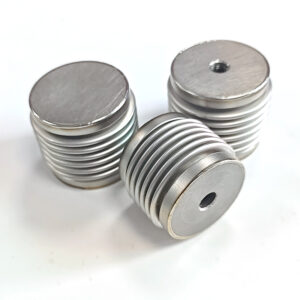
double ended flat vacuum bellows
Double-ended flat vacuum bellows
1. Superior Vacuum Sealing Performance
This is the core advantage of the double-ended flat vacuum bellows, tailored to the strict leakage requirements of vacuum systems. The flat corrugated structure adopts integral forming or seamless welding technology, eliminating potential leakage points in traditional corrugated products. After precision processing and leak detection, the product can achieve an ultra-low leakage rate of ≤1×10⁻⁹ Pa·m³/s, meeting the requirements of high vacuum (HV) and ultra-high vacuum (UHV) environments. The double-ended sealed design further enhances airtightness—both ends are equipped with precision-machined sealing surfaces that match gaskets (such as fluororubber, metal O-rings) to effectively isolate the internal vacuum environment from external air, preventing air infiltration and maintaining stable vacuum levels for long periods.
2. Flat Profile Design for Space-Saving Installation
Distinguished from traditional cylindrical corrugated bellows, the product features a unique flat corrugated cross-section, which significantly reduces the overall radial space occupation. Compared with cylindrical bellows of the same caliber and pressure-bearing capacity, its radial dimension can be reduced by 30%-50%, making it particularly suitable for compact vacuum systems or narrow installation spaces (such as inside semiconductor equipment, precision medical instruments). The flat structure also ensures uniform force distribution during compression and stretching, avoiding local stress concentration and improving structural stability under limited space constraints.
3. Excellent Displacement Compensation Capability
The flexible flat corrugated structure enables the bellows to effectively compensate for axial, radial, and angular displacements caused by machining errors, installation deviations, temperature fluctuations, and mechanical vibration. Specifically, it can achieve axial compensation of ±2mm to ±20mm (depending on length and corrugation number), radial compensation of 0.1mm to 1.5mm, and angular deviation compensation of up to 0.5°-2°, adapting to the dynamic displacement needs of vacuum pipeline systems. This compensation capability not only reduces the installation accuracy requirements of vacuum equipment but also avoids excessive mechanical stress on pipelines and connected components, preventing structural damage and extending the service life of the entire system.
4. High Material Strength & Corrosion Resistance
The product is mainly made of high-quality metal materials with excellent mechanical properties and corrosion resistance. Stainless steel 304/316L bellows are resistant to oxidation, chemical corrosion, and high/low temperatures, suitable for most general vacuum environments and harsh working conditions involving corrosive media (such as chemical vapor deposition systems). Titanium alloy bellows, used in high-end fields like aerospace, offer higher strength-to-weight ratio and resistance to extreme temperatures. For special scenarios, engineering plastic bellows (such as PTFE) can be selected for excellent insulation and corrosion resistance. The material selection ensures that the bellows can withstand vacuum pressure differences (up to 1.0 MPa external pressure) without deformation or rupture, and maintain stable performance in harsh environments.
5. Effective Vibration Damping & Noise Reduction
The elastic flat corrugated structure of the bellows has inherent damping characteristics, which can absorb vibration generated by vacuum pumps, motors, and other equipment, and isolate the transmission of vibration between pipeline components. This is crucial for precision vacuum systems—excessive vibration can affect the stability of vacuum levels, damage sensitive components (such as semiconductor wafers, medical detectors), and increase operational noise. The double-ended flat vacuum bellows can effectively filter high-frequency vibration noise, reducing noise levels by 15dB-30dB, ensuring stable operation of precision equipment and improving the working environment.
6. Standardized Double-End Connection & Easy Installation
Both ends of the bellows adopt standardized connection structures, including flange connection (DN10-DN200), thread connection (NPT/G thread), and clamp connection, which are compatible with mainstream vacuum equipment and pipelines. The connection surfaces are precision machined to ensure accurate alignment and firm fixing during installation, without the need for special tools. The lightweight design (30%-40% lighter than thick-walled cylindrical bellows of the same specification) further simplifies the installation process, reducing labor intensity and improving construction efficiency. Additionally, the product supports customized connection sizes and forms to meet non-standard installation requirements of specific projects.
7. Wear-Resistant & Long Service Life
The flat corrugations are formed by precision cold working or hot working processes, which enhance the material’s fatigue resistance and wear resistance. Unlike rubber or plastic bellows that are prone to aging, cracking, or deformation, metal double-ended flat vacuum bellows have no easily damaged parts and can withstand millions of times of telescopic cycles under rated working conditions (service life up to 100,000 hours). The product undergoes strict fatigue testing and aging testing before leaving the factory, ensuring that it can maintain stable performance in long-term vacuum operation, reducing the frequency of replacement and maintenance, and lowering the overall operating cost of the system.
8. Wide Temperature Adaptability
Adapted to the temperature fluctuations in vacuum systems, the product has excellent high and low temperature resistance. Metal bellows can work stably in the temperature range of -200℃ to 600℃ (titanium alloy models can withstand higher temperatures up to 800℃), while plastic bellows are suitable for -50℃ to 200℃. This wide temperature adaptability enables the bellows to cope with extreme temperature environments such as cryogenic vacuum systems and high-temperature vacuum coating equipment, without performance degradation or structural damage due to temperature changes, ensuring the reliability of the entire vacuum system under complex working conditions.