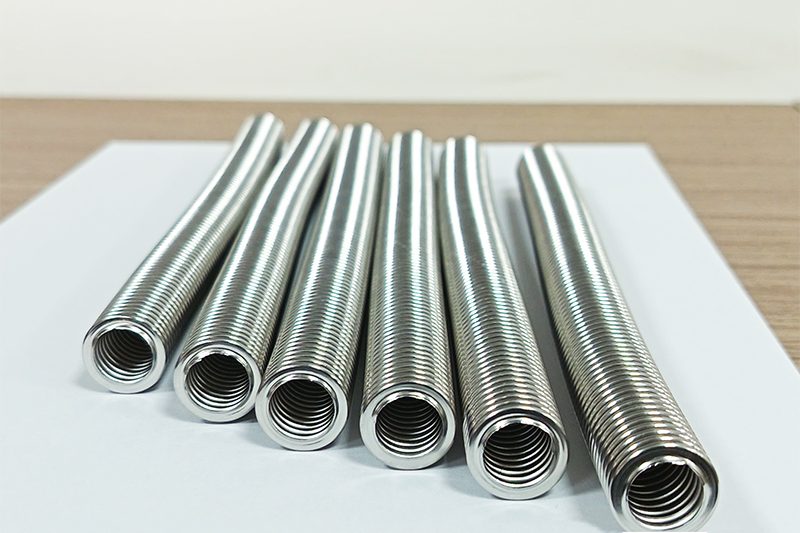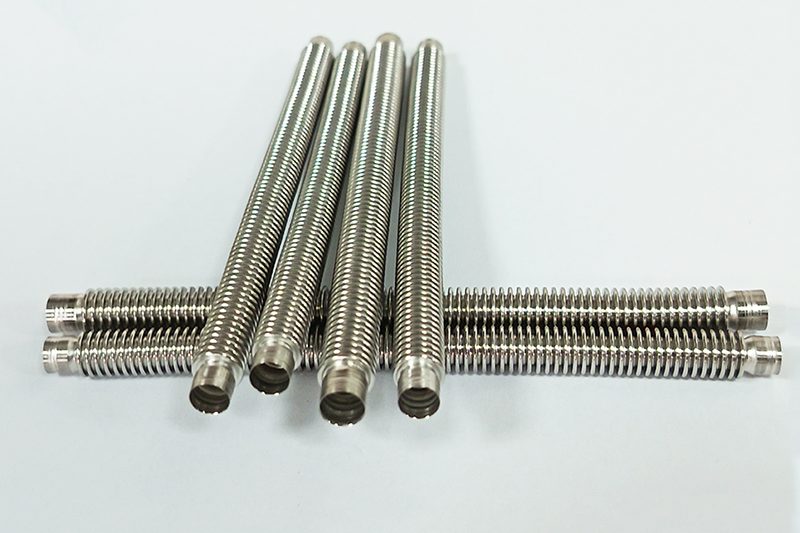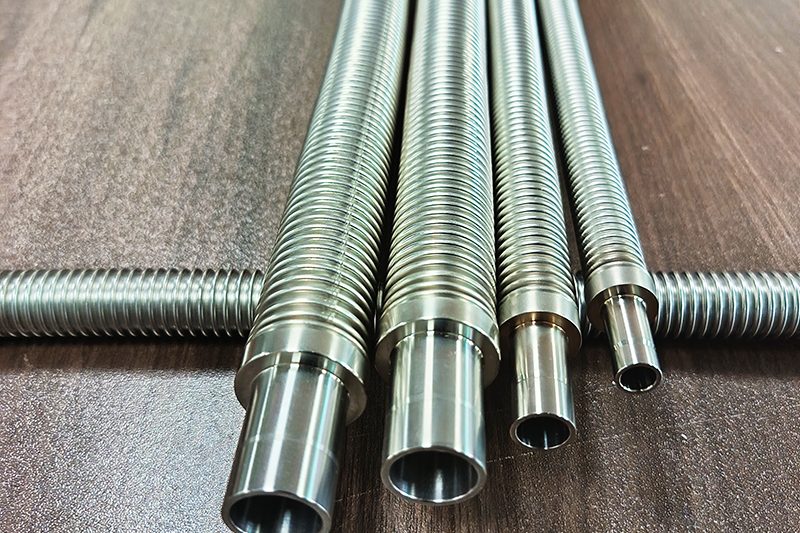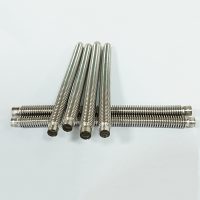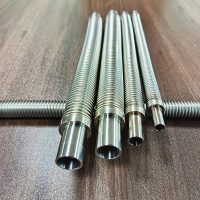
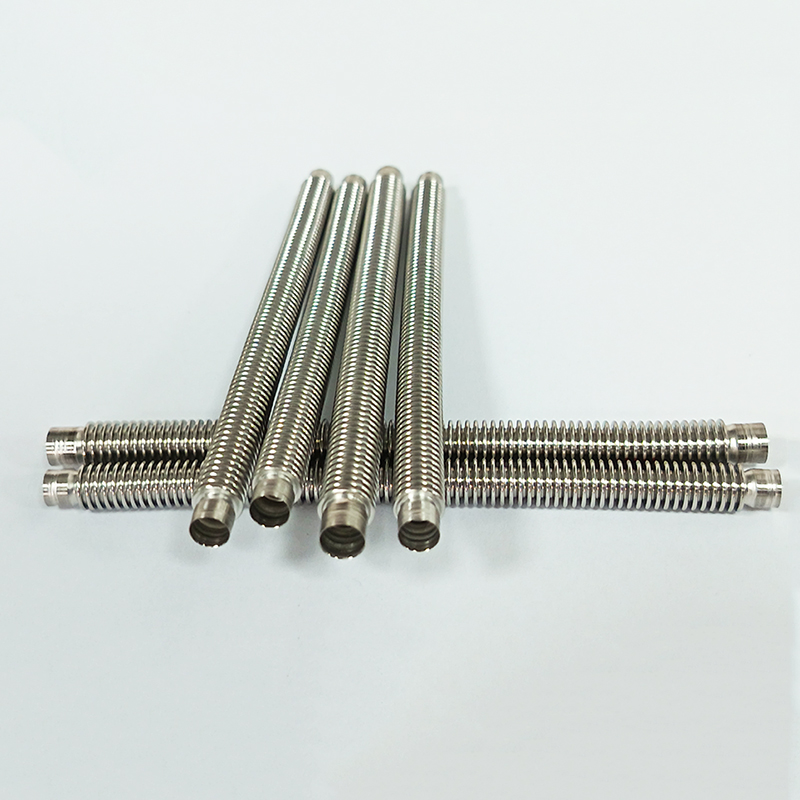
How Are Stainless Steel Bellows Manufactured? Behind‑the‑Scenes of Precision Metal Components
In petrochemical pipelines, power stations, vacuum systems and mechanical equipment, stainless‑steel (SS) bellows serve as critical flexible elements. They absorb thermal expansion, offset installation misalignment, dampen vibration, and maintain sealing under high temperature, pressure and corrosive conditions. Many engineers and procurement teams focus on performance parameters, yet few understand the complex craftsmanship behind each finished bellows.
Every reliable SS bellows goes through material screening, tube preparation, convolution forming, heat treatment, finishing and multi‑round quality inspection. Different forming technologies deliver distinct performance for various working scenarios.
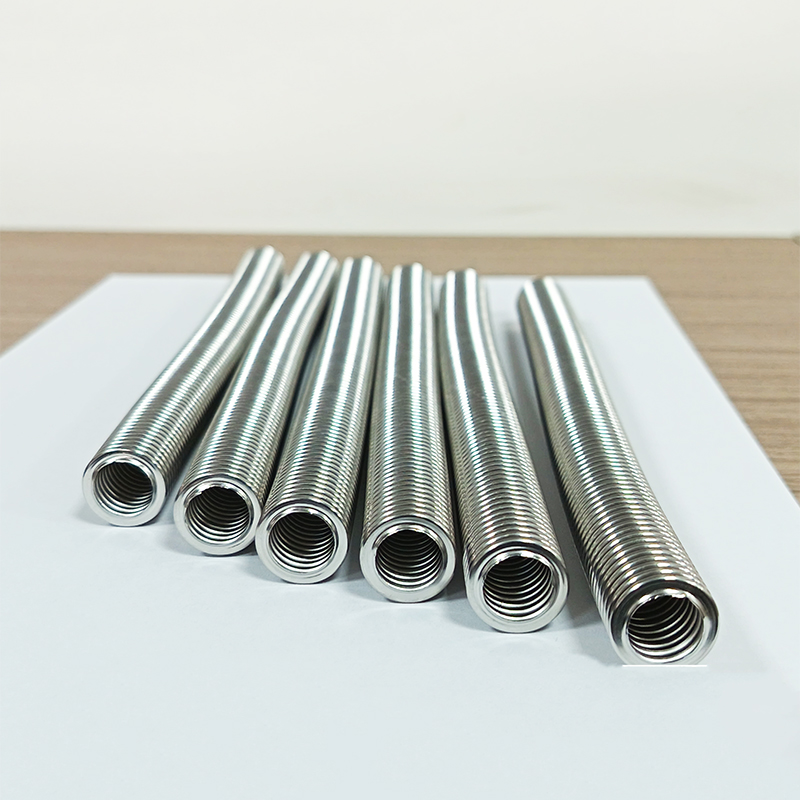
Step 1: Material Selection & Tube Blank Preparation
The whole production journey starts with raw‑material validation. Most industrial bellows adopt SS304 or SS316L stainless steel sheets, chosen for corrosion resistance and ductility. For extreme‑condition projects, special alloys such as Inconel or Hastelloy will be selected instead.
Sheets are cut to precise dimensions, rolled into cylindrical tubes, and longitudinally seam‑welded. Weld seams are planished and polished to eliminate protrusions. Thin‑walled seamless tubes are also widely used as blanks. Workpieces are cleaned to remove oil, oxide and contaminants; stress‑relief annealing softens the metal for subsequent plastic forming and prevents cracking during convolution processing.
Step 2: Core Forming — Three Main Manufacturing Methods
This is the most critical phase, where smooth tubes transform into corrugated flexible bellows. Three mainstream production techniques dominate the industry:
Hydroforming (Hydraulic Forming)
Hydroforming is the most widely‑adopted process for general‑purpose stainless steel bellows.
The prepared tube blank is fixed inside a custom split die. Both ends are fully sealed. High‑pressure fluid fills the inner cavity. Under controlled internal hydraulic pressure plus axial compression force, the tube wall expands outward and faithfully copies the die’s convolution profile in one forming cycle.
✅ Pros: Uniform wall thickness, smooth ripple surface, good consistency, suitable for mass production of pipeline expansion joints.
⚠️ Limitations: Restrictions on ultra‑deep convolution height and extremely tiny diameters.
Roll Forming / Mechanical Expanding Forming
Roll forming shapes corrugations by rotating forming wheels against the outer surface of the tube blank, creating each convolution one by one. Expanding‑segment forming uses radially expandable mandrel segments to push the tube wall outward mechanically.
This method delivers excellent repeatability for high‑volume orders. It works well for medium‑large diameter bellows and flexible metal hoses, with stable cycle efficiency and lower equipment‑cost pressure compared with hydroforming for certain sizes.
Edge‑Welded Bellows
Unlike tube‑based forming, edge‑welded bellows do not start from a complete tube. Thin metal sheets are precision‑stamped into countless circular diaphragm rings. Diaphragms are stacked alternately, then laser‑welded or electron‑beam‑welded at inner and outer edges piece‑by‑piece to build up the full bellows length.
✅ Pros: Outstanding design flexibility, ultra‑large stroke capacity, ideal for miniature, high‑vacuum, high‑precision instruments and aerospace components.
⚠️ Limitations: Labour‑intensive, higher cost; weld quality must be strictly controlled for anti‑fatigue performance.
Step 3: Post‑Processing & Assembly
Right after forming, stainless steel bellows retain heavy residual stress from cold plastic deformation. Stress‑relief annealing is mandatory to eliminate internal stress, stabilise geometry and improve fatigue life, preventing early cracking under cyclic movement.
Next comes end trimming: cutting both ends to exact drawing dimensions. Surfaces go through pickling, passivation or polishing to restore stainless steel corrosion resistance. Flanges, pipe nipples or connection fittings are welded onto two ends according to customer requirements. Reinforcing rings or outer mesh braids can be assembled for high‑pressure working environments.
Step 4: Rigorous Quality Control & Performance Testing
No bellows leaves the factory without strict validation. Key inspection items cover:
Dimensional inspection: convolution pitch, wave height, total length, end‑face flatness
Visual inspection: surface defects, weld seam integrity
Hydrostatic pressure test: verify pressure resistance
Air‑tightness or helium leak detection for vacuum‑grade products
Fatigue cycle sampling test for dynamic‑motion applications
Only units passing all tests are labelled and packaged for delivery.
Which Manufacturing Technology Fits Your Project?
For general piping expansion joints, large quantity, cost balance → Hydroforming
For large‑size bellows, high‑volume flexible hose production → Roll / mechanical expanding forming
For vacuum equipment, aerospace, high‑precision instruments, long‑stroke demand → Edge‑welded bellows