Inductive encoder coupling bellows assembly
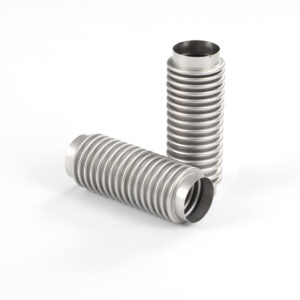
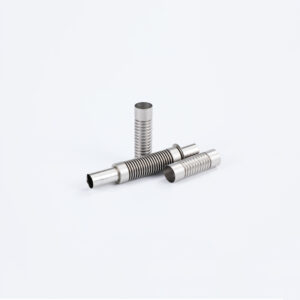
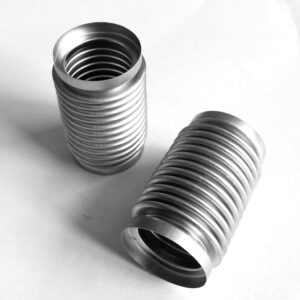
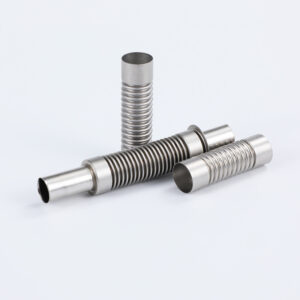
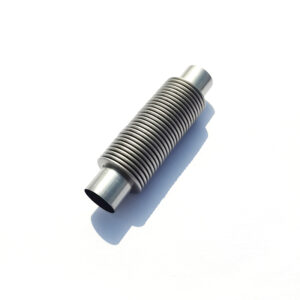
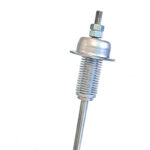
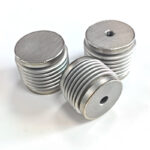
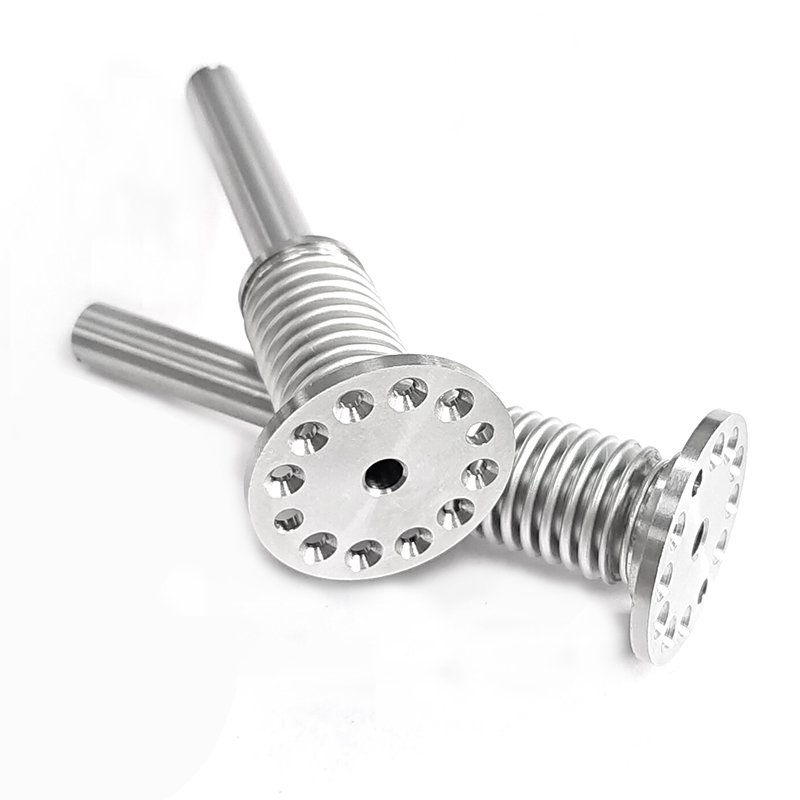
The inductive encoder coupling bellows assembly is a high-precision mechanical connection component specifically designed for inductive encoder systems. It serves as a critical link between the encoder (a non-contact position sensor based on electromagnetic induction principles) and the driven shaft (e.g., motor shaft), integrating the functions of power transmission, misalignment compensation, and signal stability protection. The assembly mainly consists of two aluminum or stainless steel hubs, a stainless steel or phosphor bronze bellows, and matching fixing structures. It is widely used in servo systems, CNC machine tools, automation equipment, and other fields that require high-precision position and speed detection, ensuring the inductive encoder can accurately capture rotational or linear displacement signals while protecting the encoder’s internal sensitive components (such as excitation coils, receiving coils, and decoding circuits).
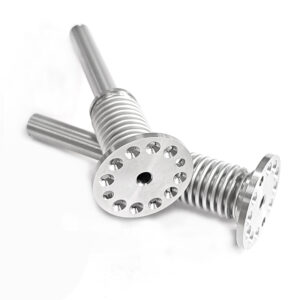
inductive encoder coupling bellows assembly
Core Features
1. High-Precision Transmission with Zero Backlash
This is the most prominent feature of the assembly, tailored to the high-resolution requirements of inductive encoders. The bellows is formed by precision stamping and welding of thin-walled metal materials, and the hubs are connected to the bellows with zero-clearance welding or clamping structures, eliminating any mechanical backlash during power transmission. This ensures that the rotational or linear motion of the driven shaft is transmitted to the encoder’s code disc without delay or hysteresis, avoiding signal distortion caused by backlash and ensuring the encoder can output accurate position and speed signals. The torsional rigidity of the bellows is significantly higher than that of traditional beam or elastic sleeve couplings, further guaranteeing transmission precision.
2. Excellent Misalignment Compensation Capability
During installation and operation, it is inevitable that there will be axial, radial, and angular misalignments between the driven shaft and the encoder shaft due to machining errors, installation deviations, and thermal expansion. The corrugated structure of the bellows gives the assembly good flexibility, which can effectively compensate for these three types of misalignments. Specifically, it can accommodate radial eccentricity of 0.02-0.2mm, angular deviation of up to 1.5 degrees, and axial end play of ±0.4mm to ±1.2mm (depending on the model). This not only reduces the installation accuracy requirements and simplifies the installation process but also avoids excessive radial and axial loads on the encoder’s small and sensitive bearings, preventing bearing wear and extending the encoder’s service life.
3. Low Inertia & High-Speed Adaptability
The assembly adopts lightweight design and high-strength materials: the hubs are usually made of anodized aluminum (some high-torque models use stainless steel), and the bellows is made of thin-walled stainless steel or phosphor bronze. This combination minimizes the rotational inertia of the coupling, which is crucial for high-speed dynamic systems—low inertia can reduce the load of the driving motor, improve the response speed of the system, and avoid resonance at high speeds. The balanced structural design (symmetrical clockwise and counterclockwise rotation characteristics) ensures stable operation even at high speeds, with the maximum allowable speed ranging from 10,000 rpm to 78,000 rpm (depending on the product specification), fully meeting the high-speed operation requirements of servo motors and precision machinery.
4. Strong Protection & Corrosion Resistance
The metal bellows itself forms a semi-enclosed protective structure, which can prevent dust, metal chips, coolant, and lubricating oil from entering the connection between the encoder and the shaft, avoiding damage to the encoder’s code disc and internal circuits. The materials used have excellent corrosion resistance: stainless steel bellows can resist oxidation and chemical corrosion, and anodized aluminum hubs can effectively prevent rust and wear. This allows the assembly to work stably in harsh industrial environments (such as machine tool workshops with cutting fluid and metal dust) and achieve long-term maintenance-free operation.
5. Good Vibration Damping & Shock Resistance
The thin-walled corrugated structure of the bellows has a certain elastic damping effect, which can absorb the vibration generated by the motor during operation and reduce the transmission of external shocks to the encoder. This is particularly important for inductive encoders, as excessive vibration can cause fluctuations in the electromagnetic induction signal, affecting measurement accuracy. The assembly can effectively filter out high-frequency vibration noise, ensuring that the encoder’s code disc rotates stably and the receiving coil can capture stable induction signals. At the same time, the integral structure of the assembly has high impact resistance, which can withstand the instantaneous impact load during equipment startup and shutdown, protecting the encoder from damage.
6. Flexible Installation & Wide Compatibility
The assembly supports multiple fixing methods, mainly including set screw fixing and clamping fixing, which are easy to install and disassemble without special tools. The bore size of the hubs can be customized according to the shaft diameters of different encoders and motors, with a common range of 3mm-25mm (or 1/8″-1″ for imperial sizes), and the ratio of large to small bores can reach more than 3:1, which is suitable for matching encoders and motors with large shaft diameter differences. In addition, the overall structure is compact, with a small outer diameter (usually 12mm-32mm) and short length, which can be installed in limited space, making it compatible with most small and medium-sized inductive encoders.
7. Wear-Free & Long Service Life
The inductive encoder itself adopts a non-contact measurement principle, and the coupling bellows assembly also uses a wear-free metal-to-metal connection structure, without elastic aging or fatigue wear problems like rubber or plastic couplings. Under normal working conditions, the assembly has no易损 parts and can achieve lifelong maintenance-free operation. The service life is mainly determined by the material fatigue life of the bellows, which can reach tens of thousands of hours under rated load and speed, matching the service life of the inductive encoder and reducing the frequency of equipment maintenance and replacement.