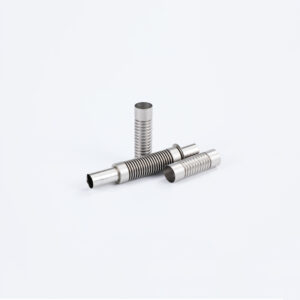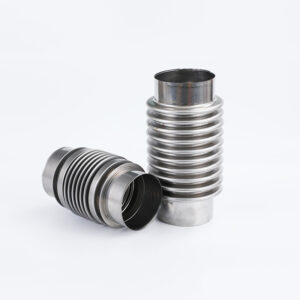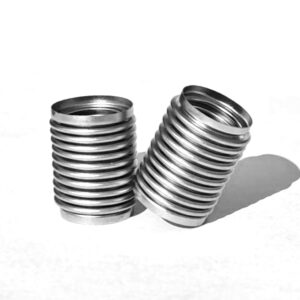
Two-section welded bellows
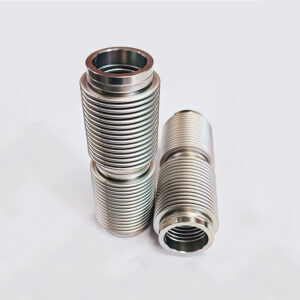
two section welded bellows
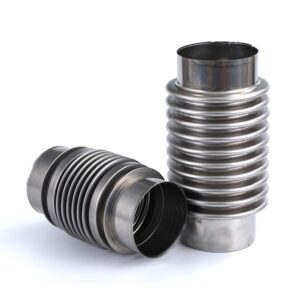
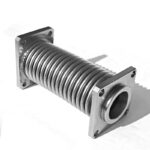
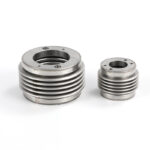
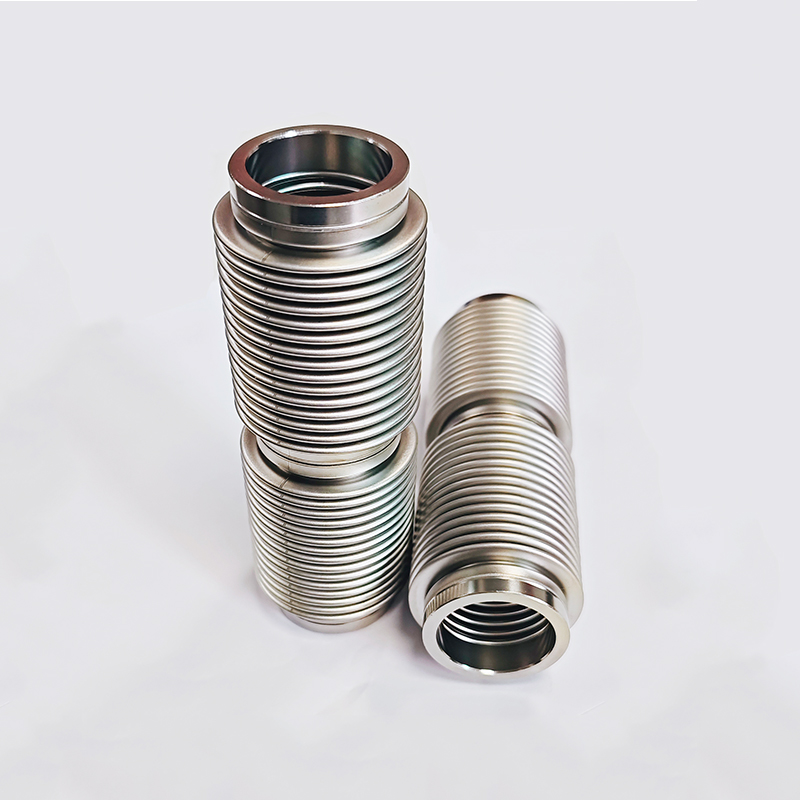
Two-section welded bellows are flexible metal components formed by precision welding two independent bellows sections together. Leveraging segmented structural design and high-precision welding technology, they balance flexible compensation, sealing isolation, and structural stability. Widely adapted to demanding conditions in high-end industrial applications, they serve as core components in connection, compensation, and sealing systems. Below are detailed descriptions of their core features and primary application areas.
Core Features
– Modular design for versatile adaptability: The two-section modular structure allows flexible combination of bellows segments with varying specifications, layer counts, and materials based on operational requirements. This eliminates the need for full customization, significantly enhancing adaptability while reducing customization costs and delivery times. It also facilitates maintenance and partial replacement, minimizing system downtime losses.
– Precision Welding for Dual Assurance of Sealing and Strength: Joints utilize micro-beam plasma welding or laser welding techniques, with weld width controllable within 0.3mm. The minimal heat-affected zone effectively prevents welding stress concentration and leakage risks, achieving a high sealing standard with a leakage rate ≤1×10⁻¹⁰ Pa·m³/s. The welded sections integrate seamlessly with the bellows body, delivering high load-bearing strength. They withstand high pressure, high-frequency vibration, and cyclic expansion/contraction, with a dynamic cycle life exceeding 10 million cycles (as tested per ASTM E8 standards).
– Exceptional Flexibility with Precise, Controllable Compensation: The two-stage structure preserves the superior flexibility of welded bellows, enabling composite motion involving axial compression, radial deflection, and angular torsion. Axial expansion reaches up to 30% of the free length with precision controlled within ±0.1mm. It accurately absorbs thermal expansion/contraction displacement, vibration, and installation deviations generated during pipeline and equipment operation, preventing damage to equipment and pipelines caused by stress accumulation.
– Outstanding Weather Resistance for Extreme Conditions: Customizable with high-performance materials like Hastelloy C-276, Inconel 718, and titanium alloys. Special treatments including electropolishing and hydrogen annealing impart exceptional resistance to high temperatures (-256°C to +1000°C), cryogenic conditions, corrosion, and radiation. Suitable for extreme industrial environments such as nuclear radiation, highly corrosive media, cryogenic temperatures, and high-temperature/high-pressure applications.
– Compact Structure, Efficient Installation: Compared to multi-stage bellows, the two-stage design offers a more compact structure with a smaller footprint. Eliminating the need for complex mounting brackets, it directly fits into confined installation spaces. This makes it particularly suitable for retrofitting and maintenance of existing equipment. On-site rapid welding installation minimizes disruption to normal system operation, with some scenarios enabling installation and maintenance without system shutdown.
– Cost-optimized with outstanding value: Modular segmented design reduces material waste. Flexible material selection for different operating conditions (e.g., using distinct corrosion-resistant or high-temperature materials for each segment) lowers material costs while maintaining performance. Post-installation maintenance requires only replacement of damaged segments, eliminating the need for complete replacements. Long-term cost-effectiveness significantly surpasses that of monolithic bellows, making it particularly suitable for maintenance and compensation needs in large piping systems.