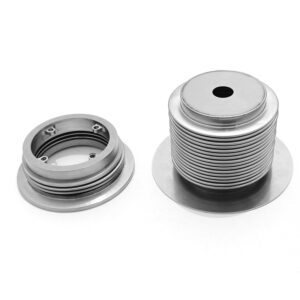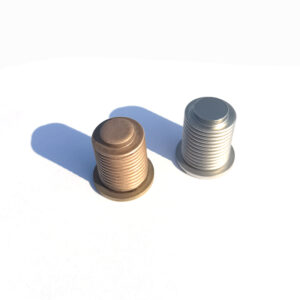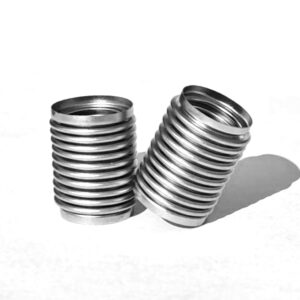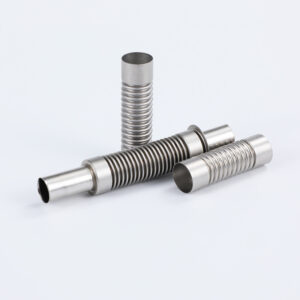
welded bellows assembly
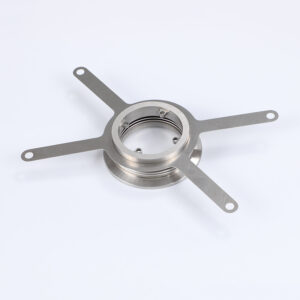
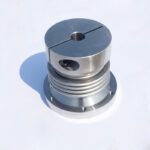
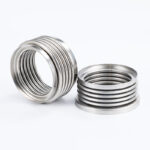
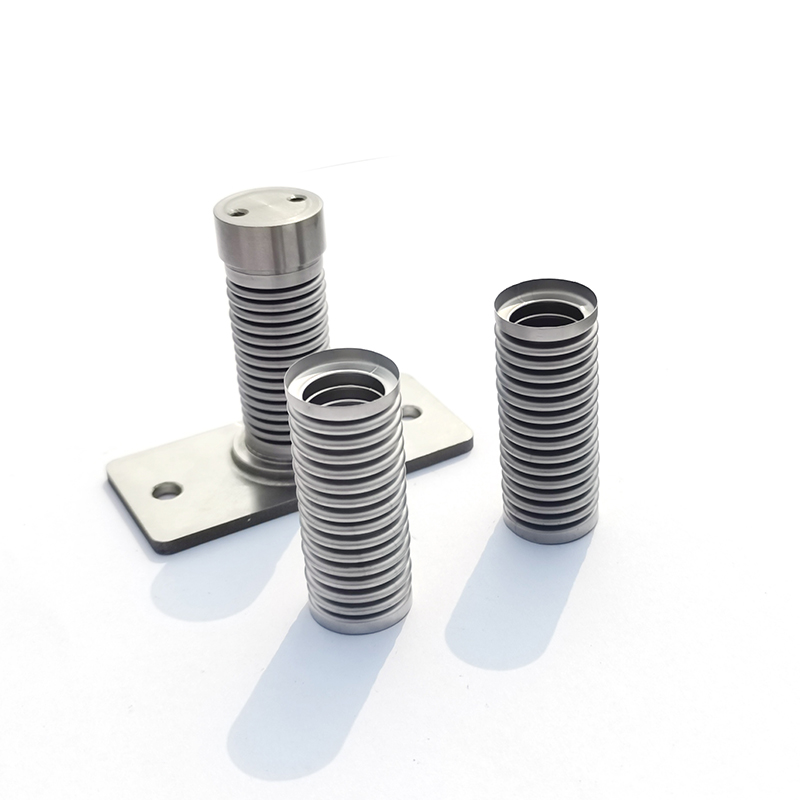
A welded bellows assembly is a flexible sealing and compensation component with a transverse corrugated structure, formed by alternately connecting multiple precision-stamped thin-walled metal diaphragms along their inner and outer edges through high-frequency precision welding processes (such as laser welding, micro-plasma arc welding, TIG welding, etc.). In addition to the main welded bellows, its core structure usually integrates end connection fittings (such as flanges, threaded joints, weld ends), seals (such as O-rings, graphite packing), and positioning components, forming a complete functional unit that can achieve sealing isolation, displacement compensation, and force/motion transmission under dynamic working conditions.
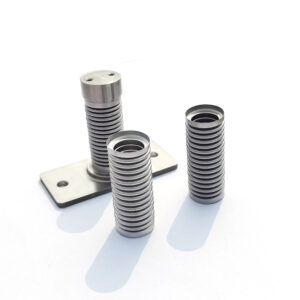
welded bellows assembly
As a key flexible component in the high-end industrial field, the welded bellows assembly is different from hydraulically formed or mechanically formed bellows assemblies. Its core advantage stems from the “segmental welding” process — through the accumulation and precision welding of thin diaphragms, it not only retains the high-strength characteristics of metal materials but also endows the assembly with excellent multi-directional flexibility. It can work stably for a long time in extreme environments (high temperature, low temperature, vacuum, corrosion, high pressure) and is a core solution for achieving zero-leakage sealing and high-precision displacement compensation. Its applications cover aerospace, nuclear industry, semiconductor manufacturing, vacuum equipment, precision instruments, petrochemical industry and other fields with strict requirements on reliability and sealing performance.
welded bellows assembly
Core Features
Relying on precise edge welding technology and all-metal sealing structure, the welded bellows assembly can achieve almost zero-leakage sealing effect. Helium mass spectrometry leak detection tests show that the leak rate can be as low as 1×10⁻¹⁰ std cc/sec He (equivalent to 1 cubic centimeter leakage in 320 years), which is far superior to traditional sealing components. Its sealing performance is not affected by dynamic displacement; even during axial expansion/contraction, angular deflection or lateral offset, it can still maintain complete isolation of internal and external media. It can effectively adapt to the sealing needs of special media such as highly toxic, flammable and explosive, strong corrosive, ultra-high purity and radioactive substances, and plays an irreplaceable role in valve sealing, vacuum systems and nuclear industry equipment.
Excellent Multi-Directional Flexibility and Displacement Compensation Capacity
The main body of the assembly is made of thin-walled metal diaphragms with a thickness of 0.001~0.025 inches (0.025~0.635mm) through welding. The special corrugated structure endows it with excellent multi-directional movement capacity, which can realize axial compression/stretching (the expansion amount of a single section can reach 30% of the free length), angular deflection and lateral offset, and the displacement accuracy can be controlled within ±0.1mm. Among them, the fixed bellows design only produces flexible deformation during installation, which can reduce the displacement of the working surface and extend the service life; the rotating design can realize self-cleaning by virtue of centrifugal force to avoid solid impurities adhering to the sealing surface. This flexibility enables it to effectively absorb pipeline thermal expansion and contraction, equipment installation deviation and vibration impact, protecting the system from stress damage.
Wide Working Condition Adaptability, Withstanding Extreme Environments
The assembly can be made of a variety of metal materials according to working condition requirements, including austenitic stainless steel (304, 316L), high nickel alloy (Inconel 625/718), Hastelloy (Hastelloy C276), titanium alloy and other special alloys. Combined with heat treatment technology, it can adapt to extreme temperature, pressure and corrosive environments. In terms of temperature, the working range can cover -75℃~425℃ (some materials can reach 800°F/425℃); in terms of pressure, it can withstand pressure levels from vacuum to 20bar (300psi); at the same time, the all-metal structure can resist corrosion from strong acids, strong alkalis, hydrocarbons and other media, adapting to harsh scenarios such as petrochemical industry, chemical industry and nuclear reactors.
High Strength and Long Service Life, Outstanding Reliability
The cumulative welding structure of the diaphragms forms a homogeneous high-strength integral body, which not only retains the compression resistance and fatigue resistance of metal materials but also achieves a balance between stiffness and linearity through optimized corrugated geometric design (such as nested corrugations, flat corrugations, crescent corrugations). Tested in accordance with ASTM E8 standards, the dynamic cycle life of the assembly can exceed 10 million times, which is much higher than that of traditional flexible sealing components; its axial stiffness is affected by material thickness and corrugated geometric parameters, and the accuracy can be controlled within ±10%, which can stably transmit force and displacement signals, adapting to the application of precision instruments and sensors. In addition, the modular clamp-type design makes it easy to install, and combined with standardized components, it can reduce maintenance costs and downtime.